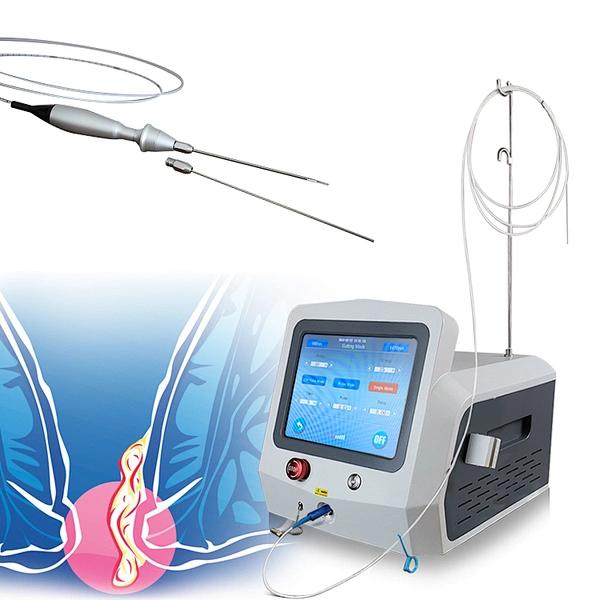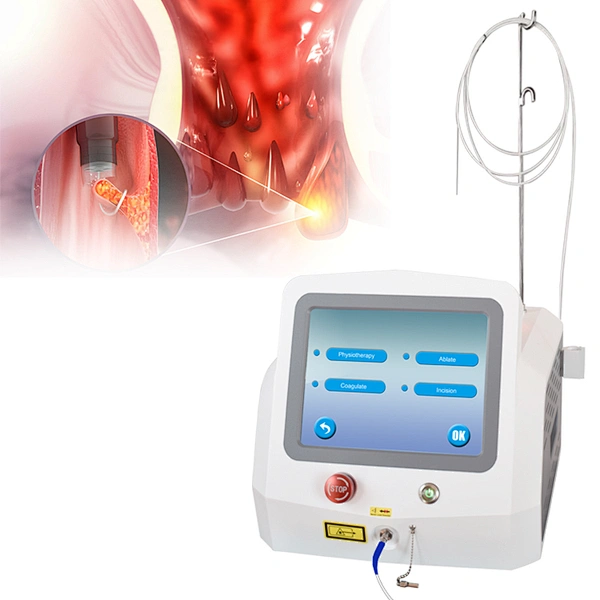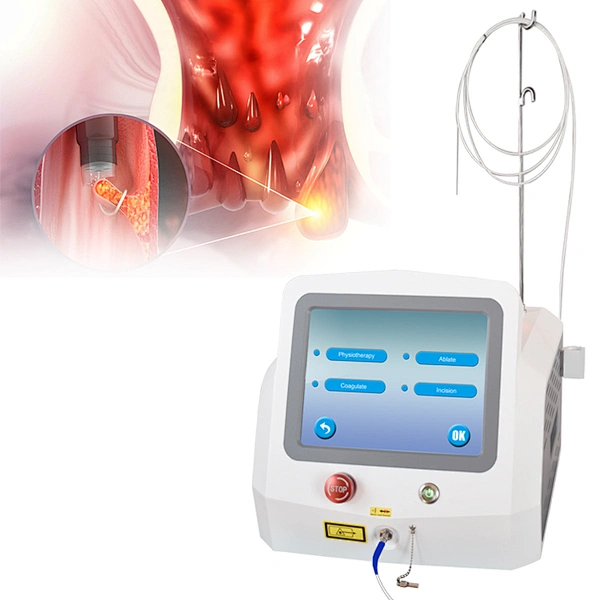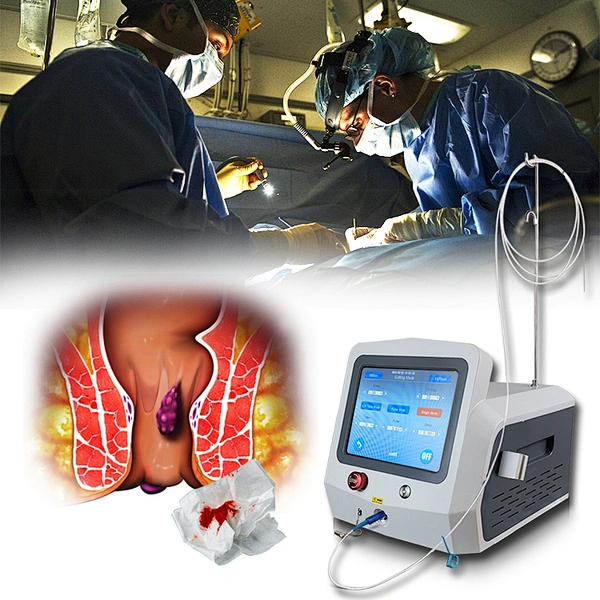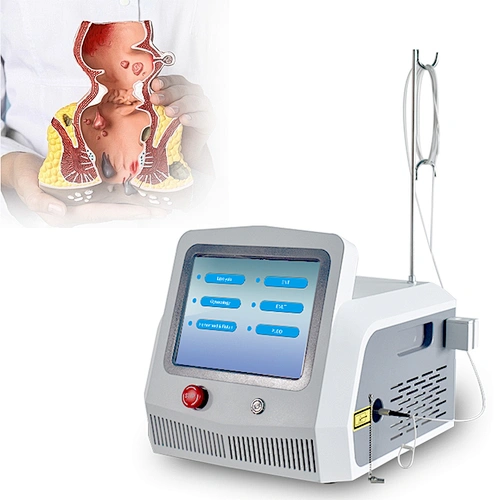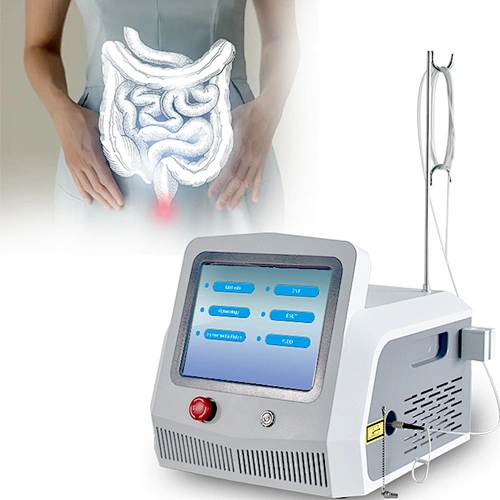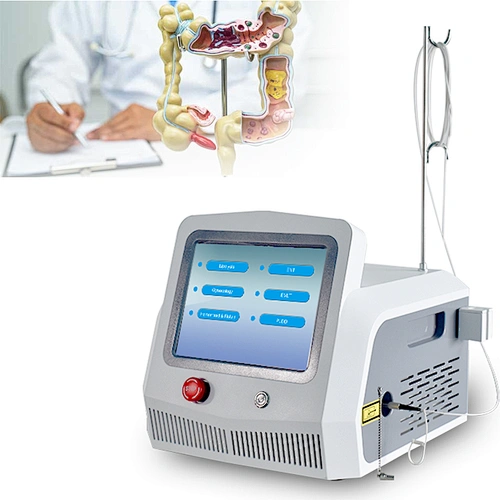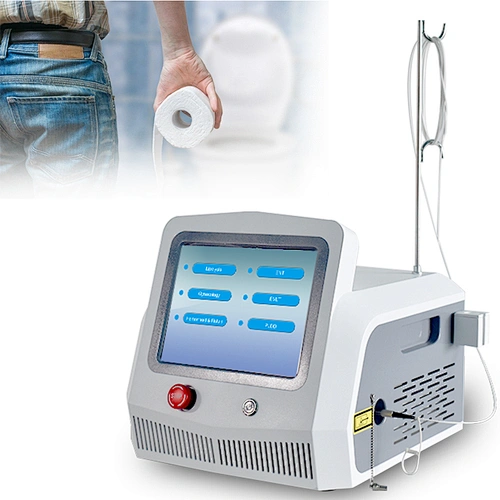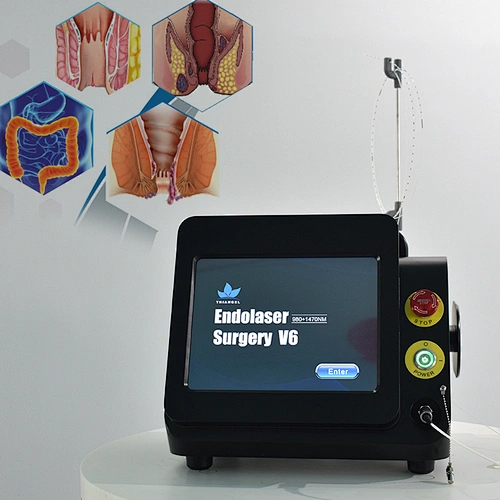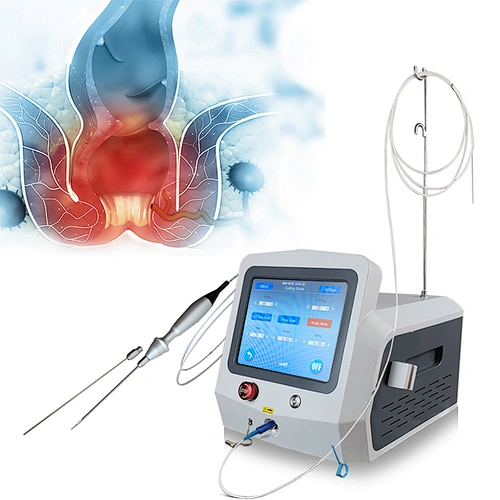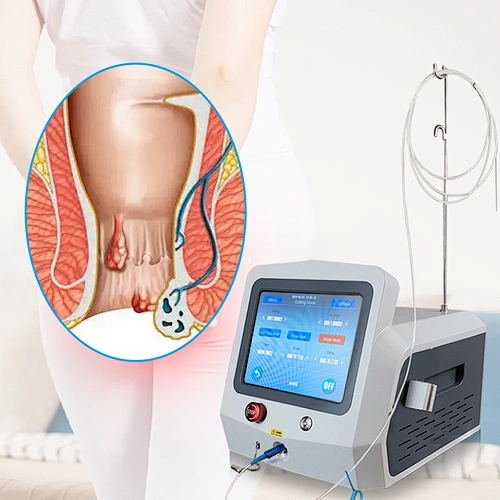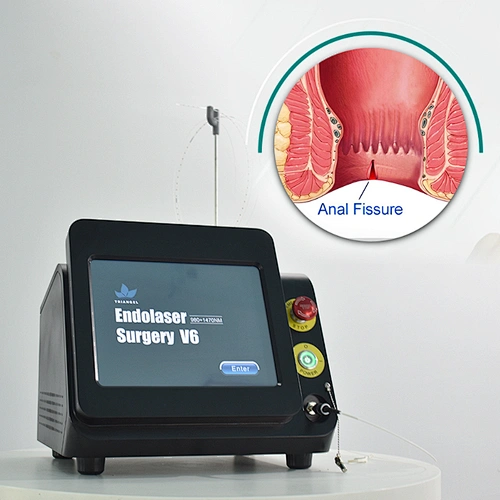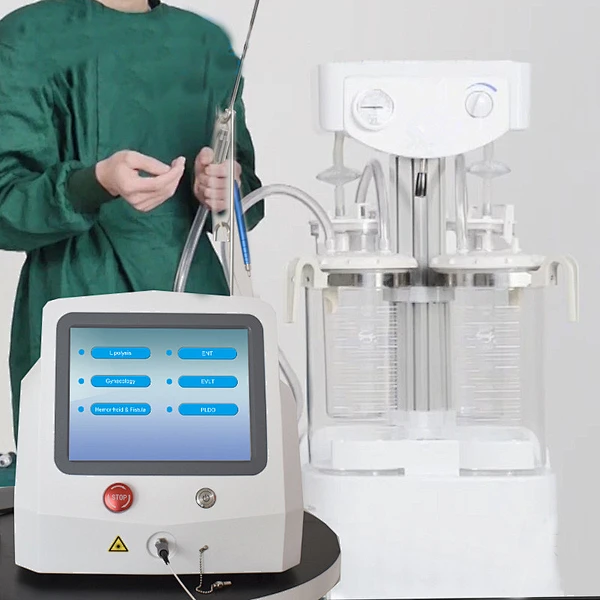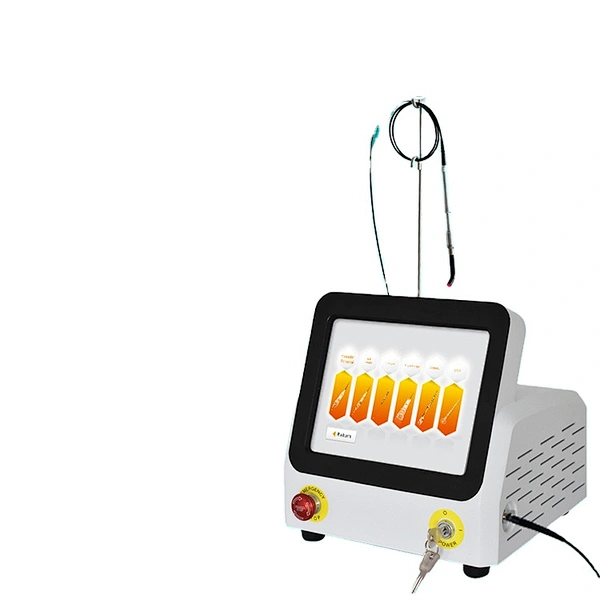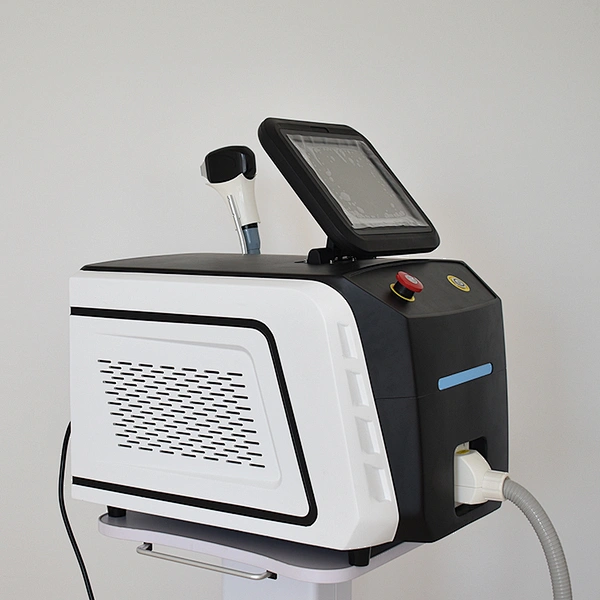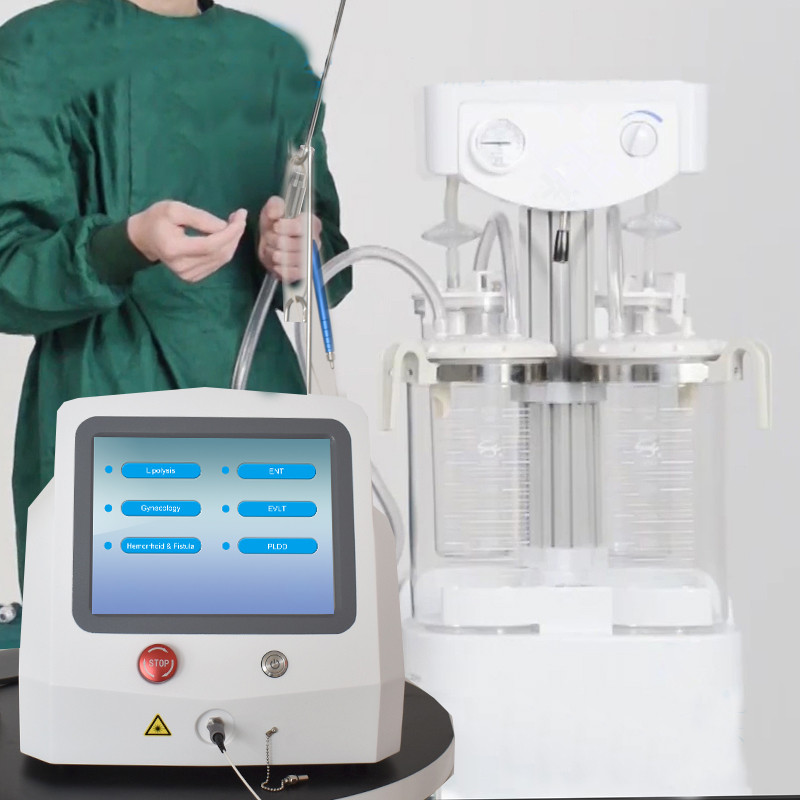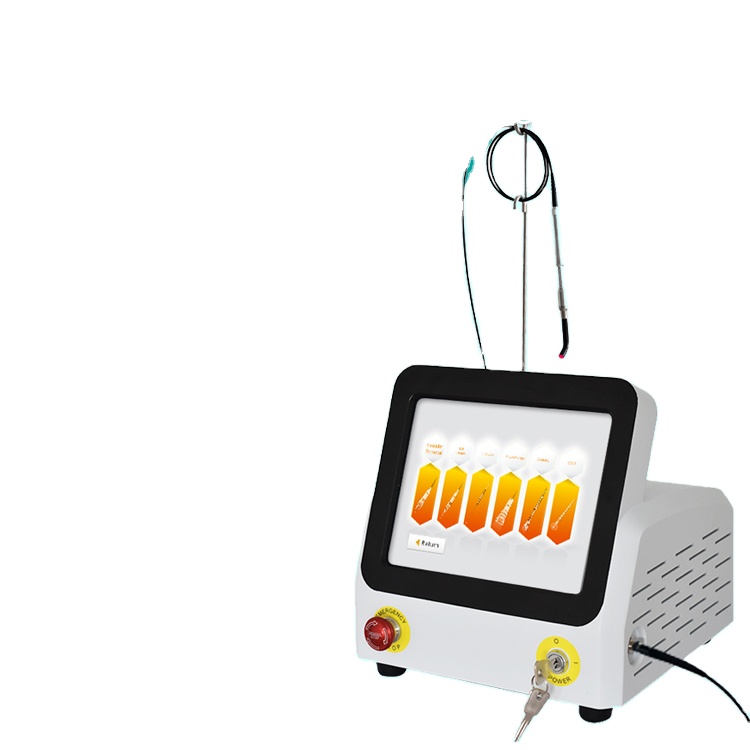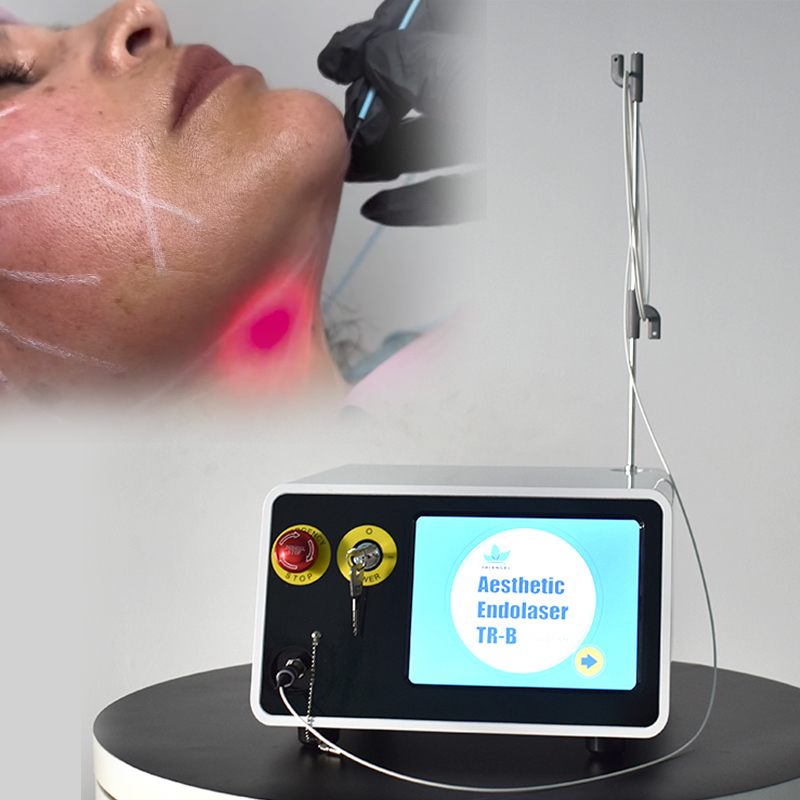
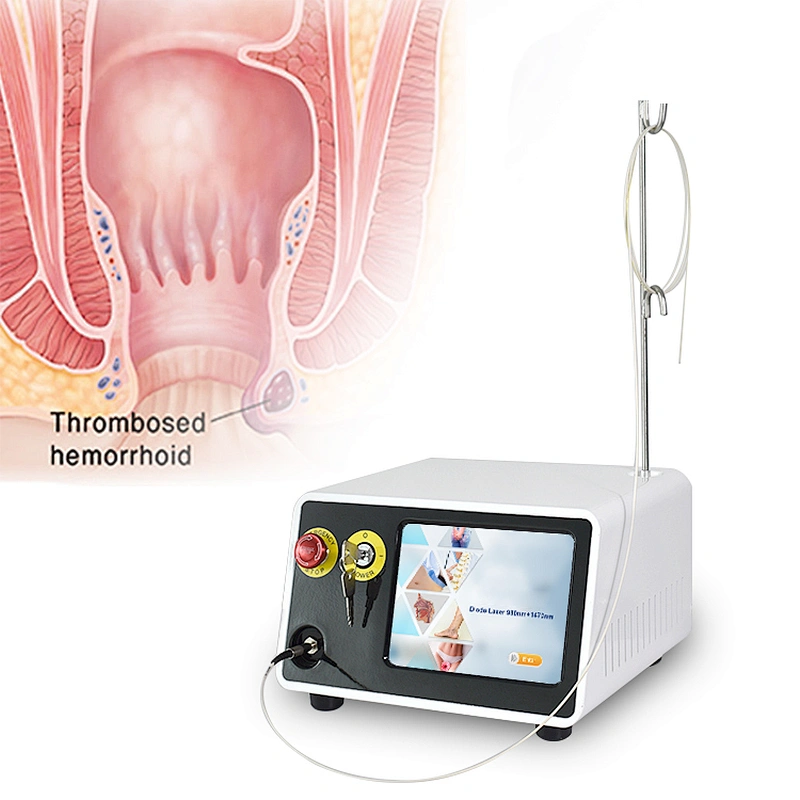
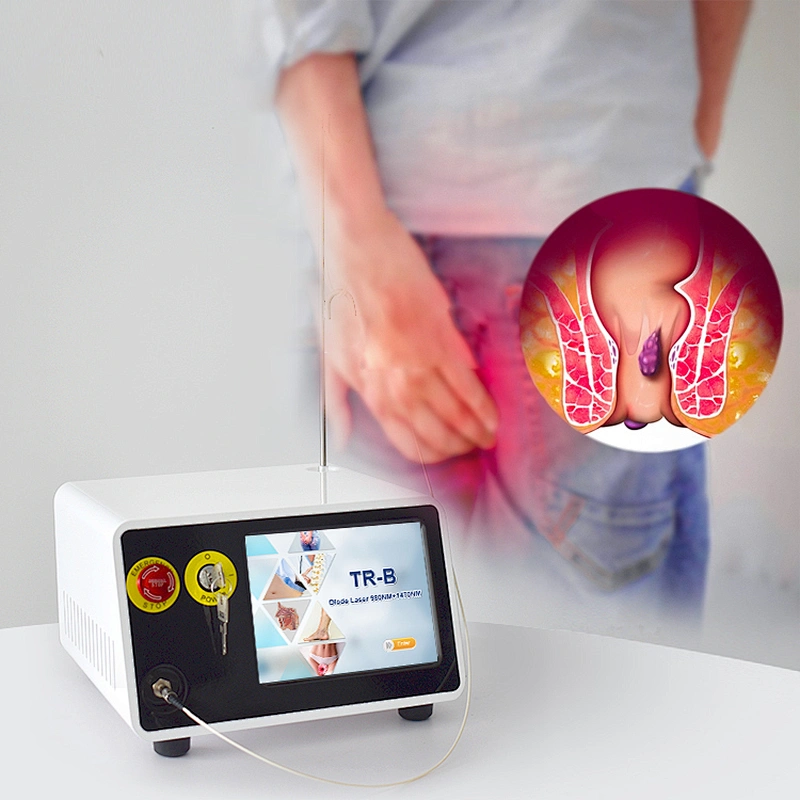

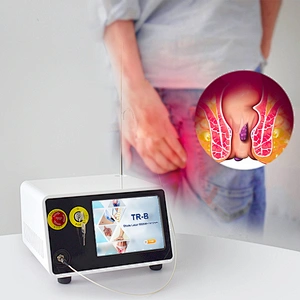
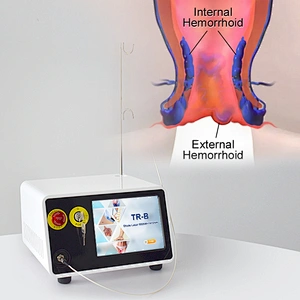
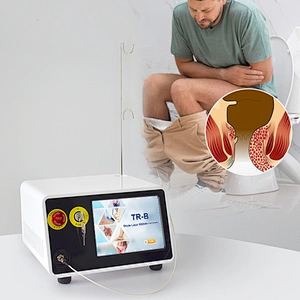

Triangelaser diode laser platform
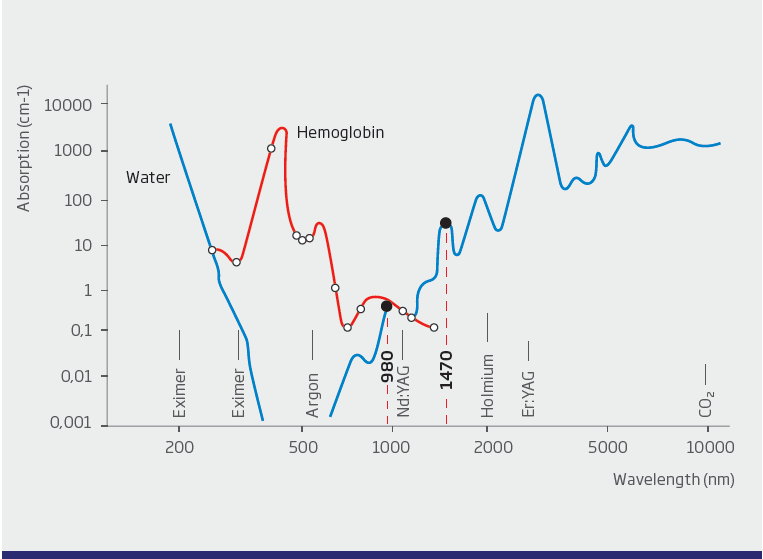
Is based on the excellent absorption characteristics of the wavelengths 980nm and 1470nm. The combination of the two
wavelengths enables a tissue interaction in both hemoglobin (980nm) and water (1470nm). Together with the moderate tissue
penetration, a minimally invasive, safe and precise treatment in extremely delicate anatomic structures is guaranteed.
- Place of Origin:Beijing, China
- Brand Name:TAZLASER
- Model Number:TR-B
- Power Source:Electricity
- Warranty:1 Year
- After-sale Service:Online technical support
- Material:Plastic
- Shelf Life:1years
- Quality Certification:ce
- Instrument classification:Class II
- Safety standard:MFDS
- Name:Hemorrhoid laser
- Laser Power:30w+17w
- Fiber diameter:400um/600um fiber
- Working mode:CW, Pulse and Single
- Certification:MDRCE/ce/ISO13485/ISO9001
- Connector:SM905 international standrard
- Pulse Width:0.00s-1.00s
- Delay:0.00s-1.00s
- Voltage:100-240V, 50/60HZ
- Aiming Beam:Adjustable Red indicator light 650nm
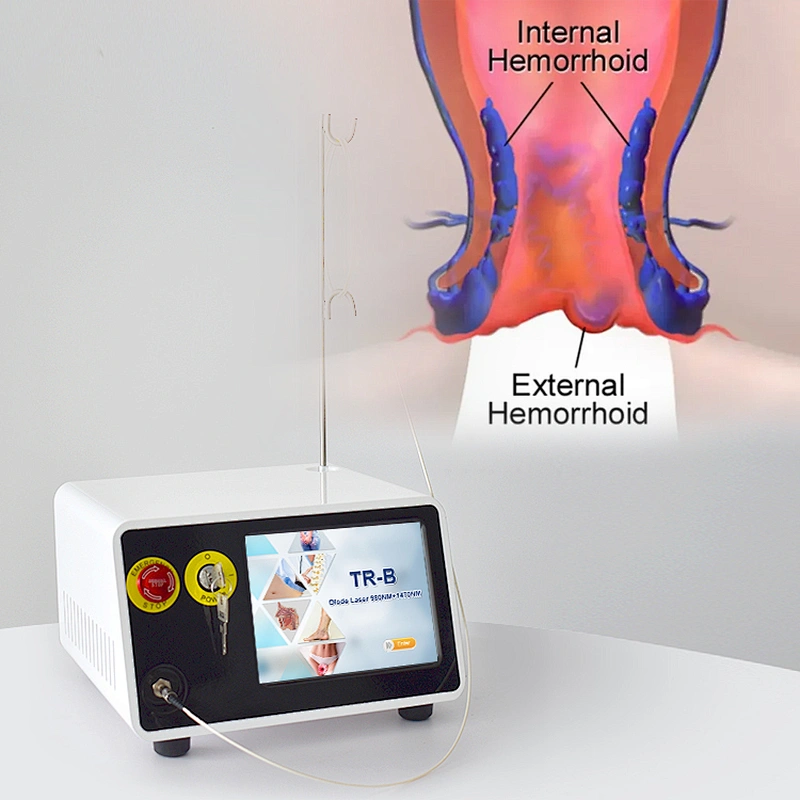
Dual wave 980nm 1470nm diode laser treatment hemorrhoid and hemorrhoid cutting
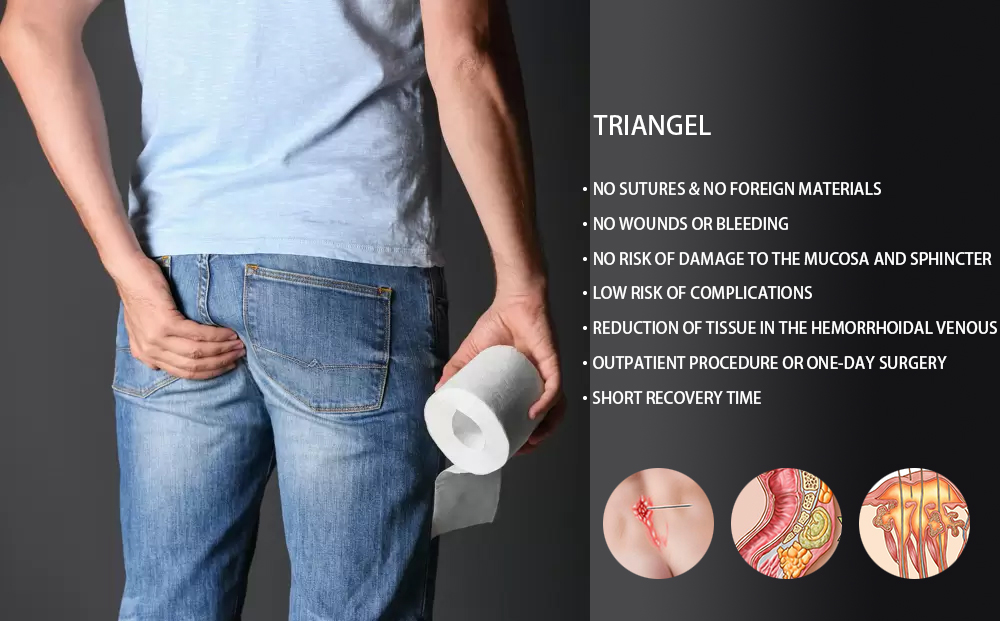
Products Description
Model | TR-B |
Laser type | Diode Laser Gallium-Aluminum-Arsenide GaAlAs |
Wavelength | 980nm+1470nm |
Output Power | 30w+17w |
Working modes | CW, Pulse and Single |
Pulse | 0.01-1s |
Delay | 0.01-1s |
Indication light | 650nm,intensity control |
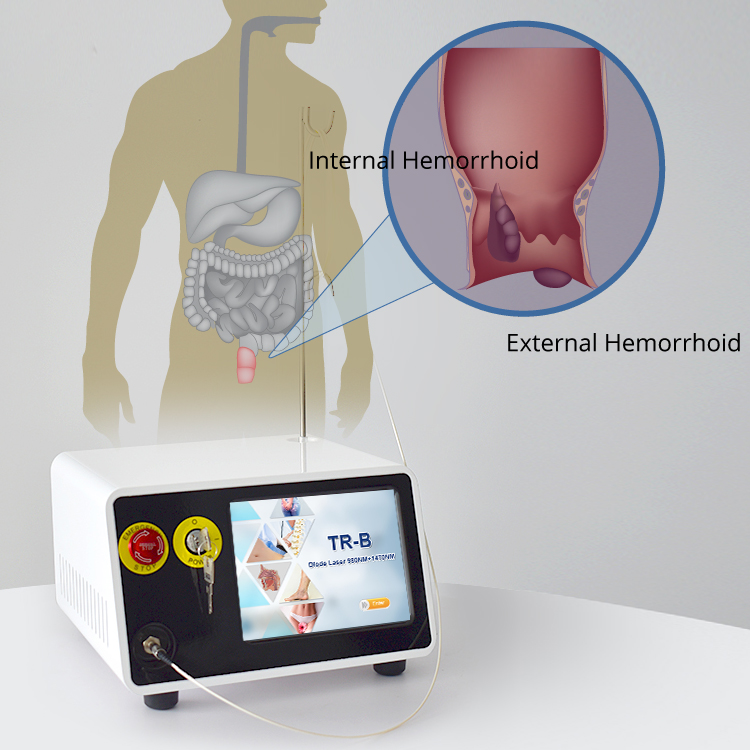
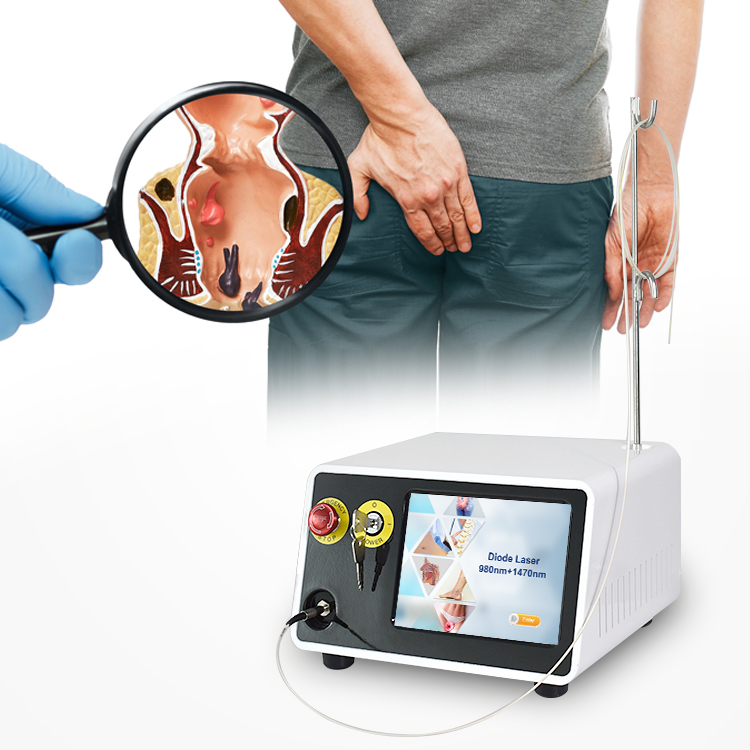
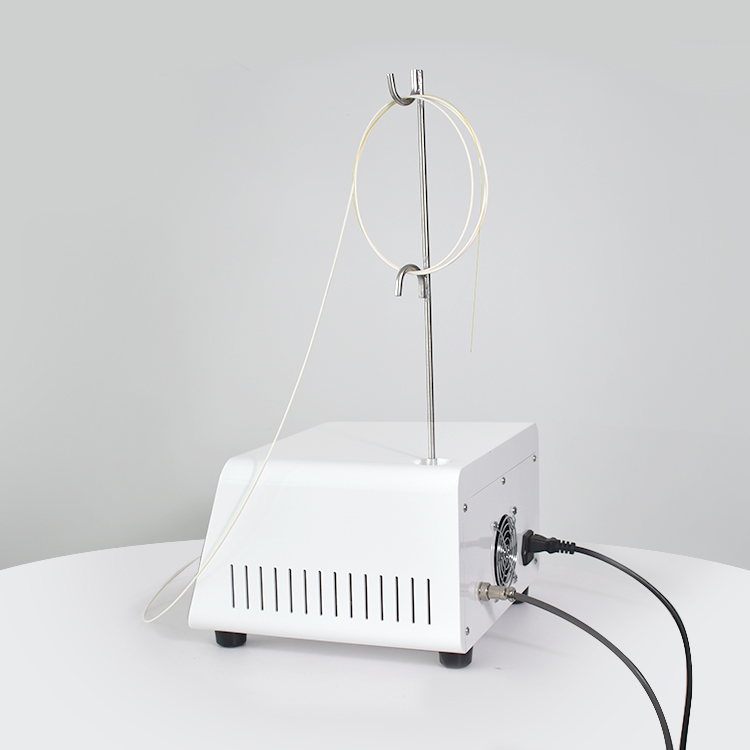
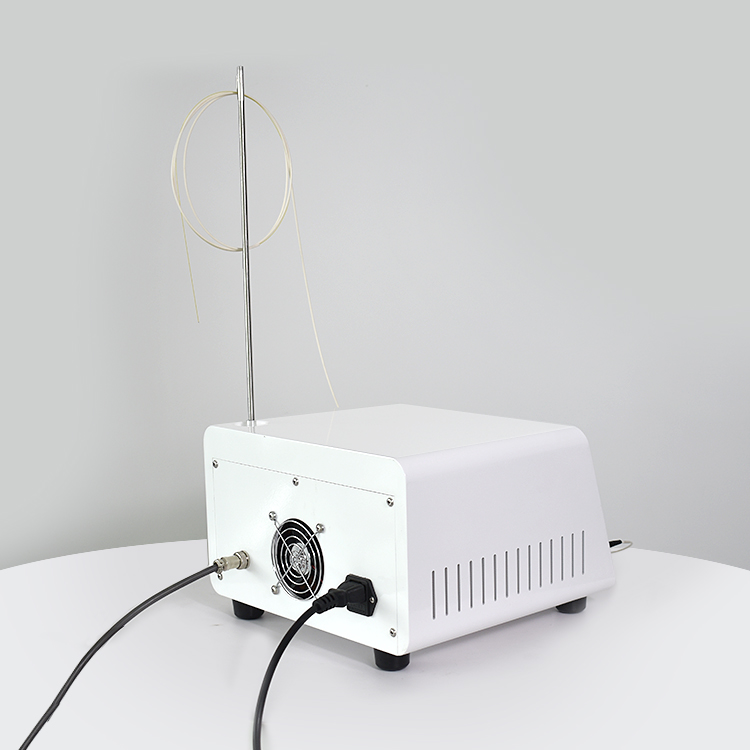
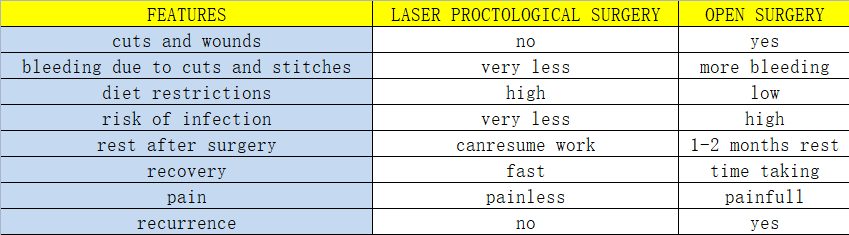
Using TRIANGEL TR-B, the surgeons can either use a single wavelength or both, based on the ailment and the treatment plan.Either way, the device offers precise incision, excision, vaporisation, haemostasis, and tissue coagulation.
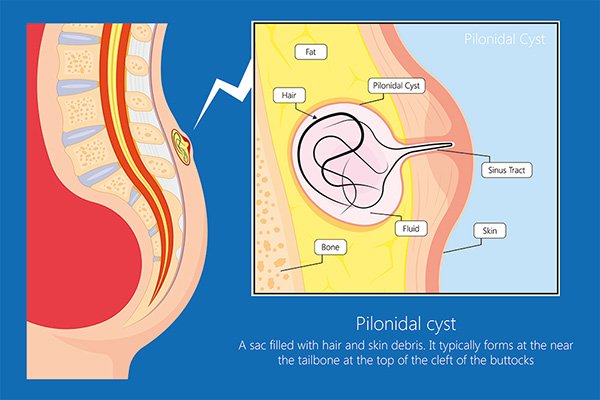
What is Laser Proctology?
The field of proctology is concerned with diseases of the colon, rectum and anal canal. The use of lasers as a surgical tool to treat the diseases related to the colorectal area is known as Laser Proctology.
How does it work?
Laser (Light Amplification by Stimulated Radiation) is a light beam of high energy. This light beam is used to burn the abnormal tissue or diseased area. The laser machine used presently in proctology is a 1470nm diode laser. This is connected with a fibre with a glass tip which delivers the energy beam into the targeted tissue.
What are the applications?
Laser is presently used in the treatment of the following diseases in proctology
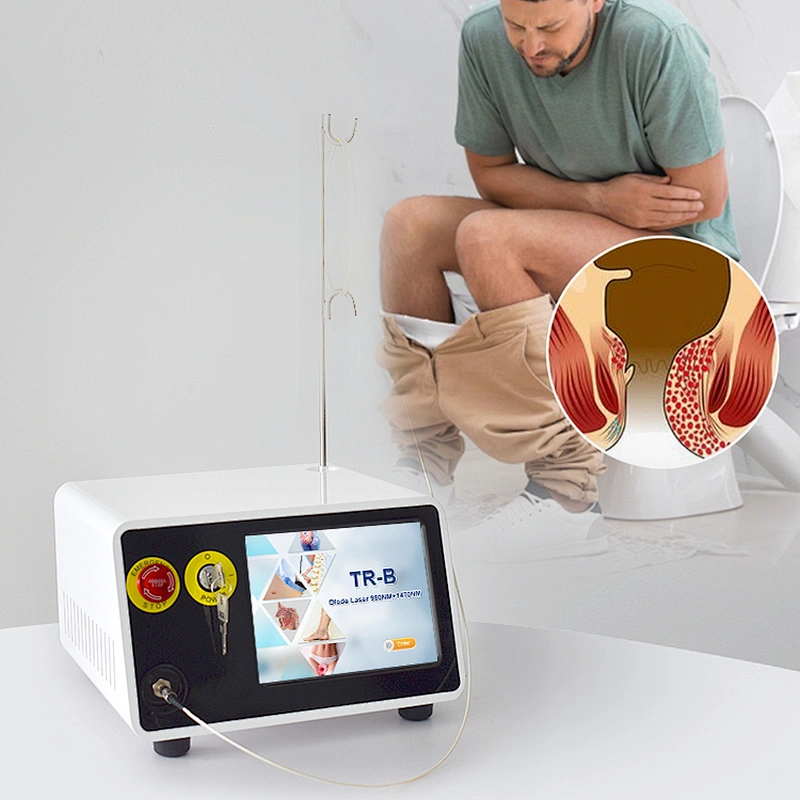
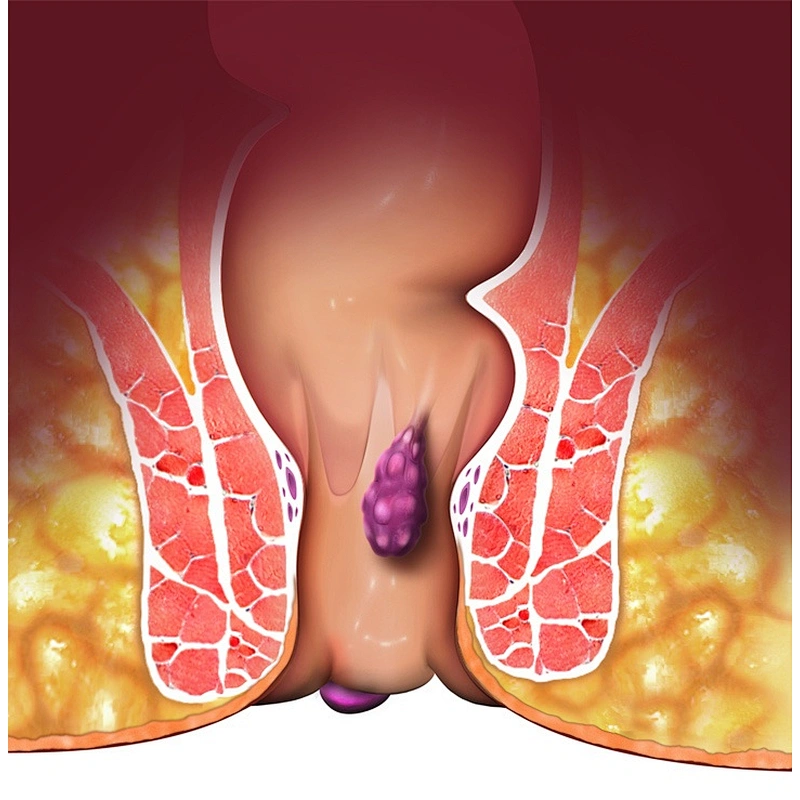
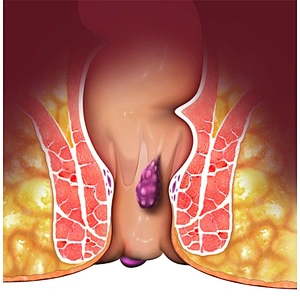
1. Laser Hemorrhoidoplasty A laser beam is focused only on the hemorrhoid to destroy it with minimal damage to surrounding tissues. This beam causes the hemorrhoid to shrink.
2. Fistula tract laser closure The fistula tract is destroyed and sealed using a360 deg laser emission fibre which is passed into the tract. The epithelial lining is destroyed with obliteration and gradual shrinkage of the tract.
3. Laser fissure treatment This can be done as a day-care procedure and extremely effective. Laser energy is used to ablate and vapourize the abnormal tissue
4. Laser ablation of Pilonidal sinus This is literally non invasive and painless with significant healing of the pilonidal sinus
tracts. There is minimal collateral damage to the surrounding tissues and no external wound.
Benefits of Laser Surgery ·
1.Significantly less postoperative pain·
2.Less operative time·
3.Faster Recovery·
4.Accurate Surgical precision·
5.Minimal recurrence
6.Anal Sphincter preserved (no chance of incontinence)
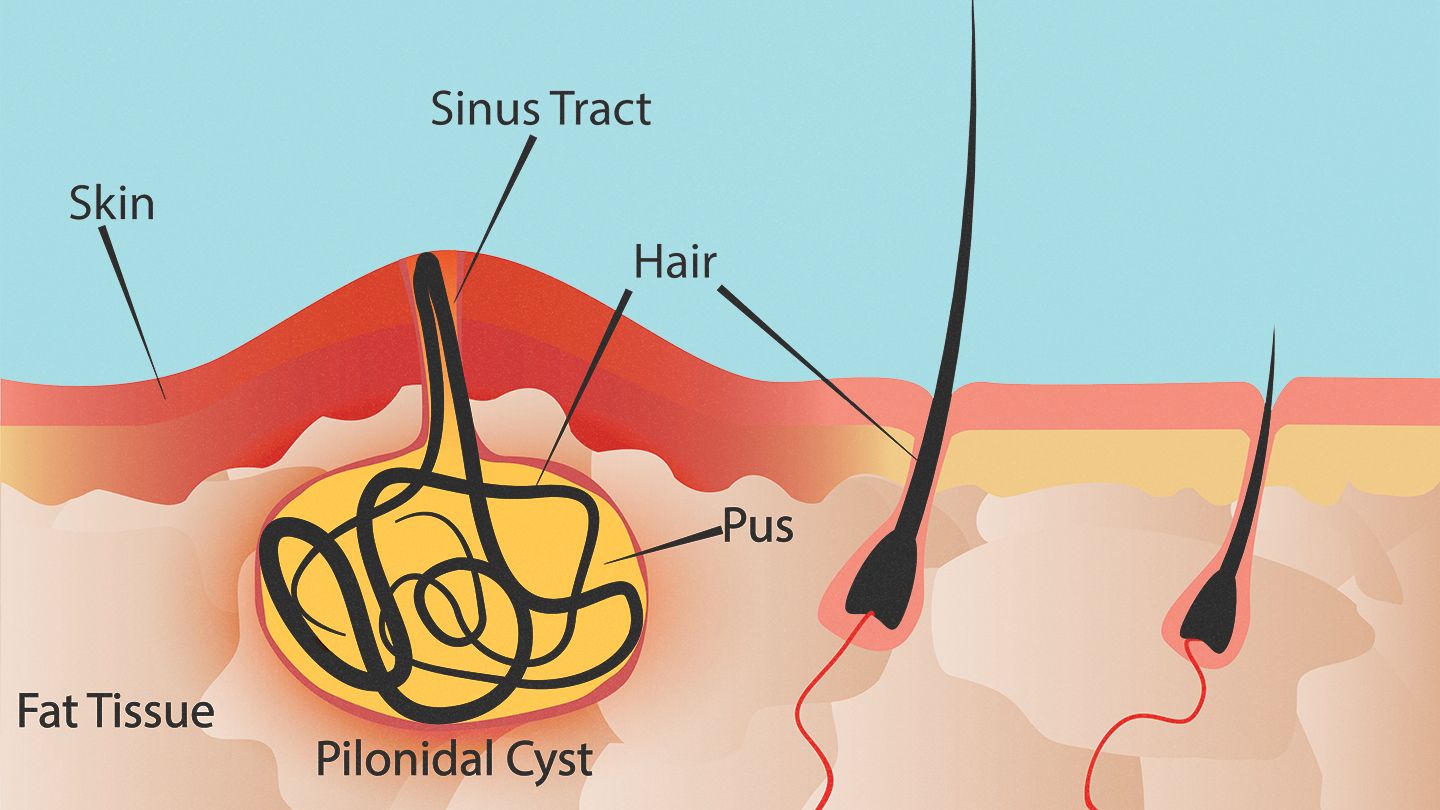
Treatment Effect
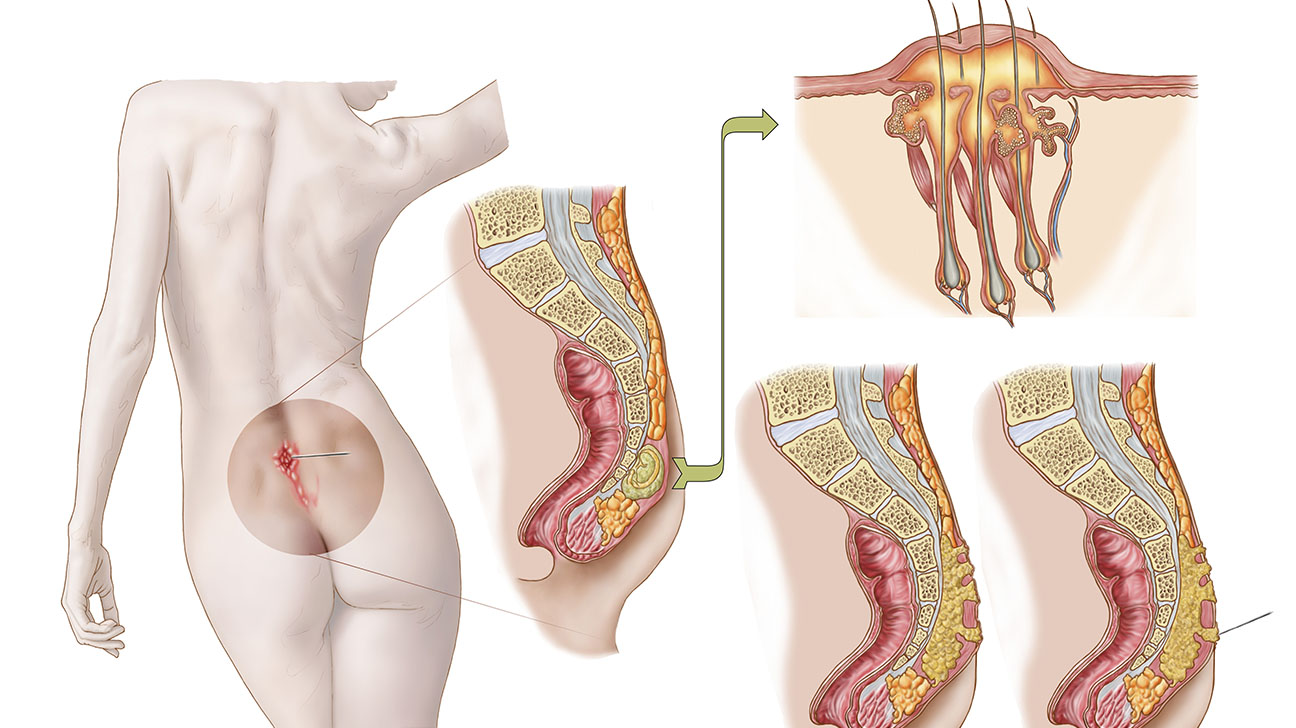
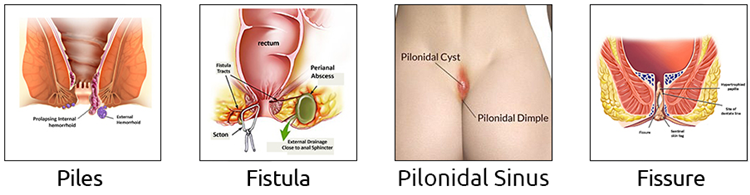
With this tech nique, healing of pilonidal sinus is achieved by the thermal effect of a laser beam emitted by a diode laser. The penetration of the laser energy is con trolled and limited to 2–3 mm around the fifibre. As a result of the destruction of the epithelial lining and the granulation tissue, a shrinking and sealing effect on the sinus is elicited . The procedure
can be easily applied to all patients regardless of the stage of their disease. A high healing rate was observed after the fifirst session (90.3%, 214 of 237) with a median healing time of 47 days (range 30– 70 days). A second treatment was offered to patients who failed in the fifirst session and was successful in 78.3% (18/23). The duration of the procedure ran ged from 20 to 30 min and it had limited morbidity (wound infection in 7.2%, 17 of 237). One of the
strengths of our technique is that it can be carried out under local anaesthesia and in complex cases with the additional use of intravenous sedation.
can be easily applied to all patients regardless of the stage of their disease. A high healing rate was observed after the fifirst session (90.3%, 214 of 237) with a median healing time of 47 days (range 30– 70 days). A second treatment was offered to patients who failed in the fifirst session and was successful in 78.3% (18/23). The duration of the procedure ran ged from 20 to 30 min and it had limited morbidity (wound infection in 7.2%, 17 of 237). One of the
strengths of our technique is that it can be carried out under local anaesthesia and in complex cases with the additional use of intravenous sedation.
Method
SiLaT was applied under local anaesthesia after a small skin incision of 0.5–1 cm and careful cleaning of the sinus tracts with a curette. A radial fifibre connected to a diode laser set at a wavelength of 1470 nm was then introduced into the tracts. The laser energy was
delivered in continuous mode.
delivered in continuous mode.
Other treatment: hemorrhoids, anal fissure, anorectal fistulae,piles, fissure, fistula and pilonidal sinus.
For Piles/ Haemorrhoids:
Laser haemorrhoidoplasty (LHP)
Laser hemorrhoidectomy
For Anal Fissure:
Laser Sphincterotomy
Laser Fissurectomy
For Anal Fistula:
Fistula Tract Laser Closure (FiLac)
The ligation of the intersphincteric fistula tract (LIFT)
Laser haemorrhoidoplasty (LHP)
Laser hemorrhoidectomy
For Anal Fissure:
Laser Sphincterotomy
Laser Fissurectomy
For Anal Fistula:
Fistula Tract Laser Closure (FiLac)
The ligation of the intersphincteric fistula tract (LIFT)
If you want more information, please click here to contact us
Products Advantages
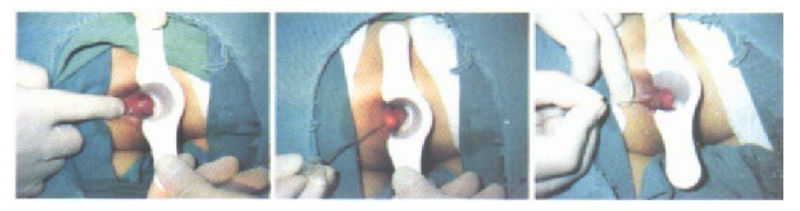
TRIANGEL tr-b is one of the most advanced laser machines used for treatment of proctological maladies such as piles, fissure, fistula and pilonidal sinuses.
The usage of TRIANGEL Laseev 980nm 1470nm Laser for Proctology is a win-win situation for both the patients and the surgeon. While it makes the procedure simpler and less painful for the patients, it also created a more workable environment for the surgeons in the operating room.
The usage of TRIANGEL Laseev 980nm 1470nm Laser for Proctology is a win-win situation for both the patients and the surgeon. While it makes the procedure simpler and less painful for the patients, it also created a more workable environment for the surgeons in the operating room.
If you want more information, please click here to contact us
Company Profile
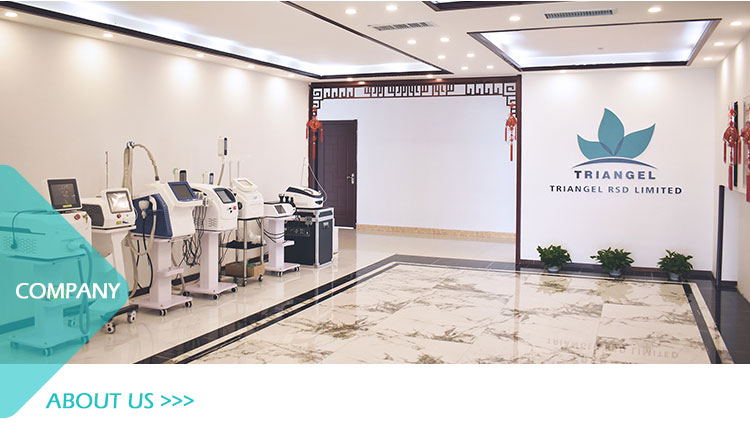
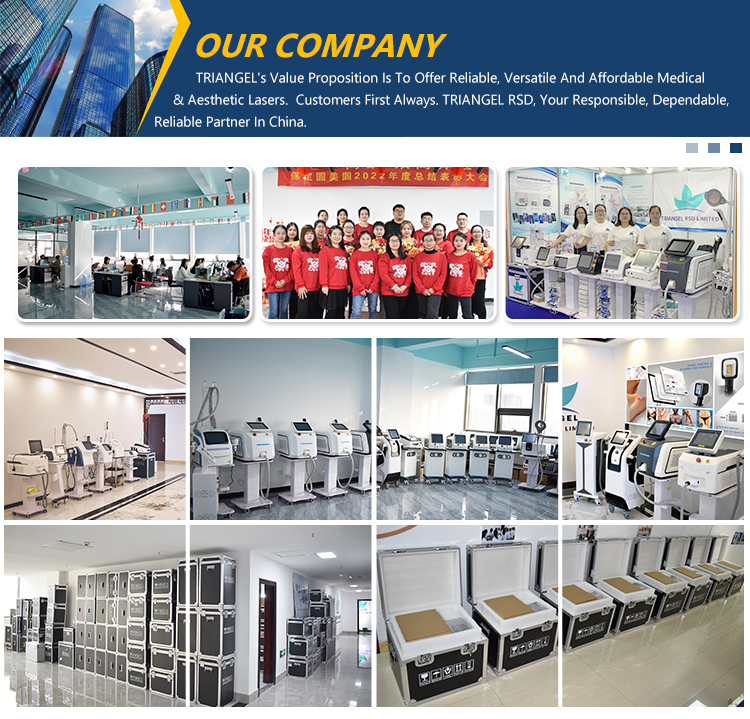
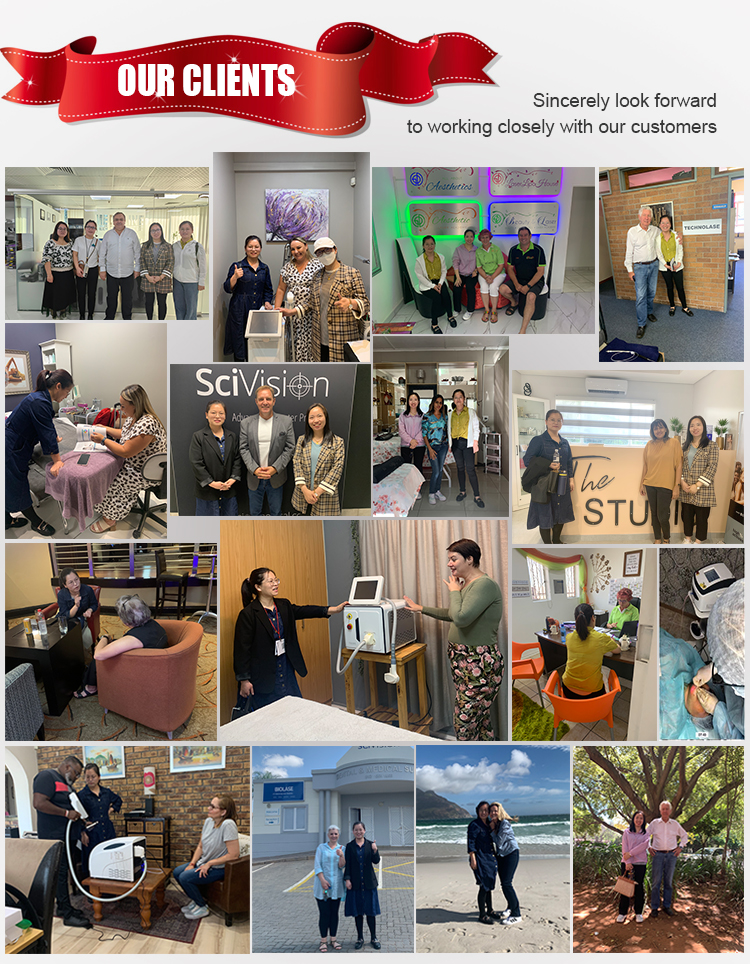
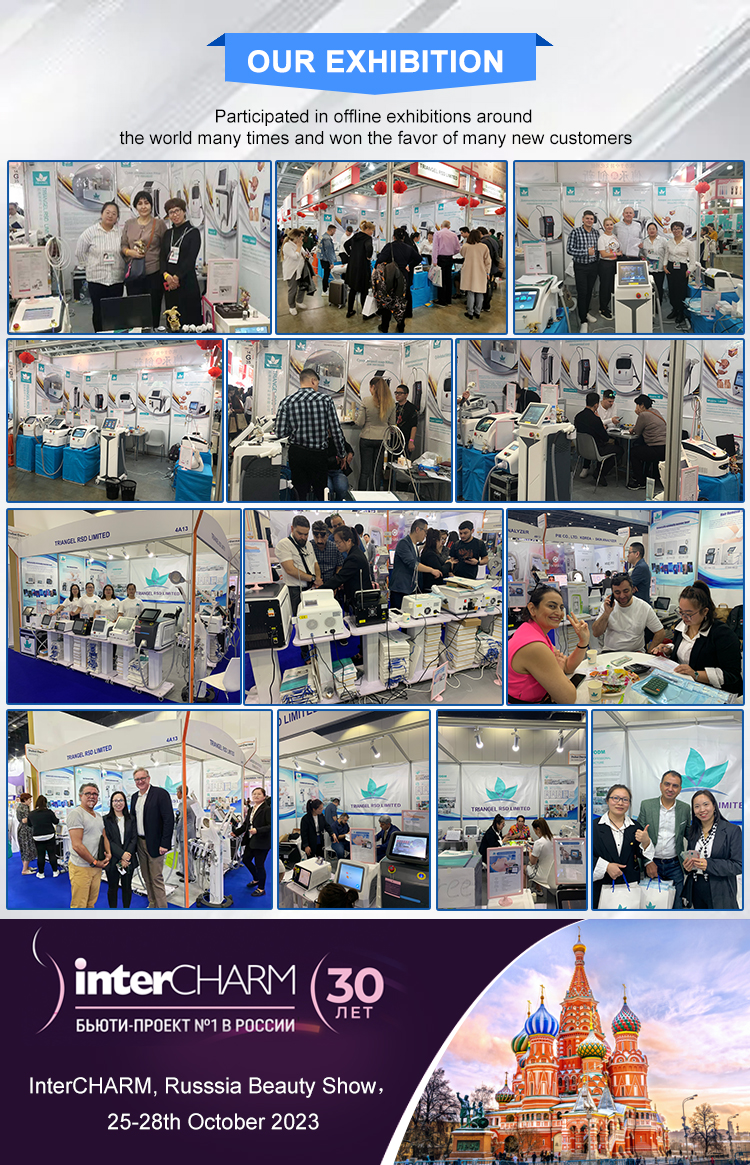
BAODING TAZLASER ELECTRONICS TECHNOLOGY LIMITED,is one of the specialized manufactures focused on the Aesthetics laser equipment in China,established in March 2010.We have our own repair companies & training centers in several countries,like Portugal,Russia,Australia,South Africa...could offer the technical support and clinical training in the fast and efficient way. TRIANGEL got different certificates for clients from all over the world.CE,ISO13485, RoHS;We also take part in exhibitions every year,Cosmoprof Asia(HongKong),DUBAI DERMA,INTERCHARM(Moscow),Expocosmetica(Oporto),AMSCA(South Africa)...
TRIANGEL,hope to be your Responsible,Sincere and Dependable partner in China!
FAQ
1. Which grade of haemorrhoids is suitable for Laser procedure?
Laser is suitable for haemorrhoids from grade 2 to 4.
2. Can I pass motion after Laser Haemorrhoids Procedure?
Yes, you could expect to pass gas and motion as usual after the procedure.
3. What shall I expect after Laser Haemorrhoids Procedure?
Post-operation swelling shall be expected. This is a normal phenomenon, due to heat generated by laser from inside of the haemorrhoid. Swelling is usually painless, and will subside after a few days. You might be given medication or Sitz-bath to help in reducing the swelling, please do it as per instructions by the doctor/nurse.
4. How long do I need to lie down on bed for recovery?
No, you do not need to lie down for long for recovery purpose. You can perform daily activity as usual but keep it at minimal once you've discharged from hospital. Avoid doing any straining activity or exercise such as weight lifting and cycling within the first three weeks after the procedure.
5. Patients choosing this treatment will benefit from the following advantages:
Minimal or no pain
Fast recovery
No open wounds
No tissue is being cut off
Patient can eat and drink the next day
Patient can expect to pass motion soon after surgery, and usually without pain
Accurate tissue reduction in the haemorrhoid nodes
Maximum preservation of continence
Best possible preservation of sphincter muscle and related structures such as anoderm and mucous membranes.
Laser is suitable for haemorrhoids from grade 2 to 4.
2. Can I pass motion after Laser Haemorrhoids Procedure?
Yes, you could expect to pass gas and motion as usual after the procedure.
3. What shall I expect after Laser Haemorrhoids Procedure?
Post-operation swelling shall be expected. This is a normal phenomenon, due to heat generated by laser from inside of the haemorrhoid. Swelling is usually painless, and will subside after a few days. You might be given medication or Sitz-bath to help in reducing the swelling, please do it as per instructions by the doctor/nurse.
4. How long do I need to lie down on bed for recovery?
No, you do not need to lie down for long for recovery purpose. You can perform daily activity as usual but keep it at minimal once you've discharged from hospital. Avoid doing any straining activity or exercise such as weight lifting and cycling within the first three weeks after the procedure.
5. Patients choosing this treatment will benefit from the following advantages:
Minimal or no pain
Fast recovery
No open wounds
No tissue is being cut off
Patient can eat and drink the next day
Patient can expect to pass motion soon after surgery, and usually without pain
Accurate tissue reduction in the haemorrhoid nodes
Maximum preservation of continence
Best possible preservation of sphincter muscle and related structures such as anoderm and mucous membranes.