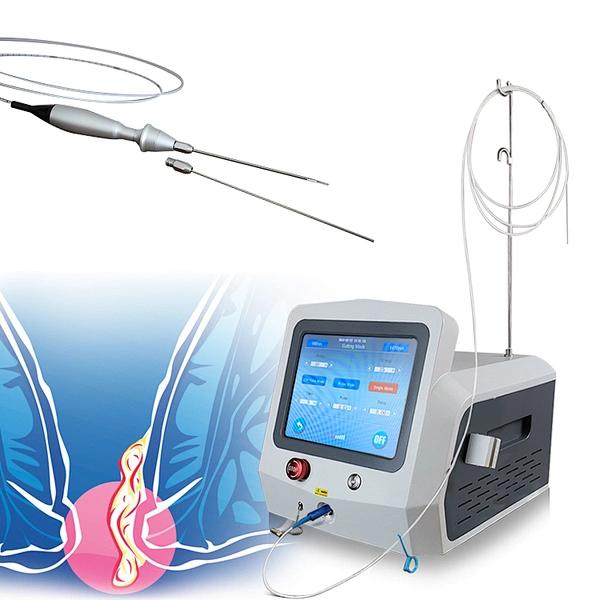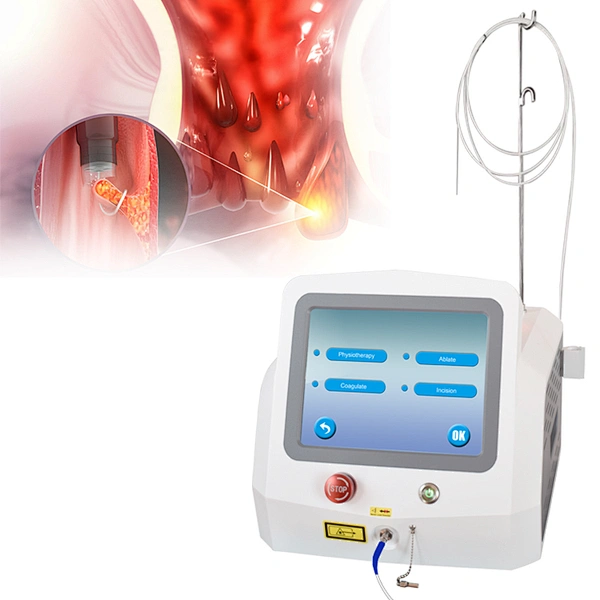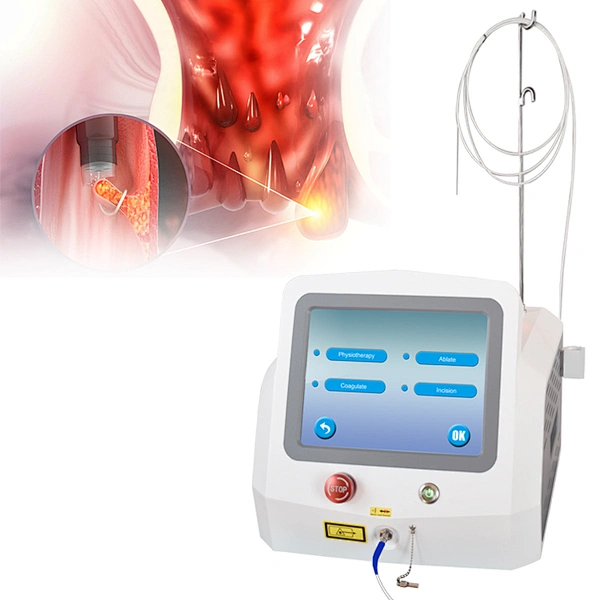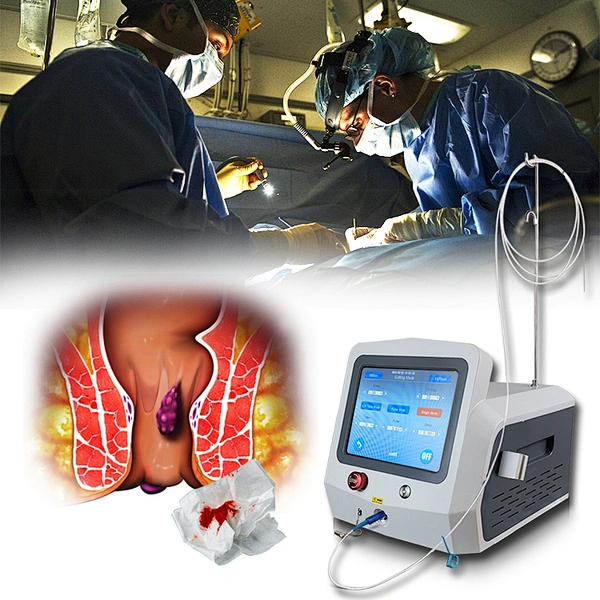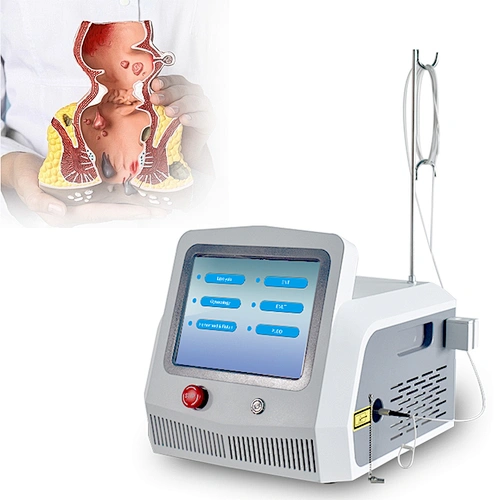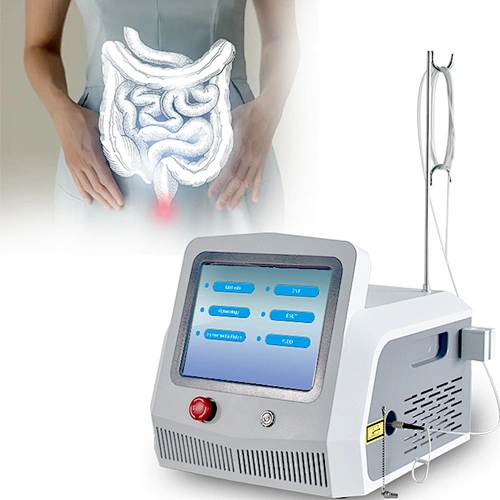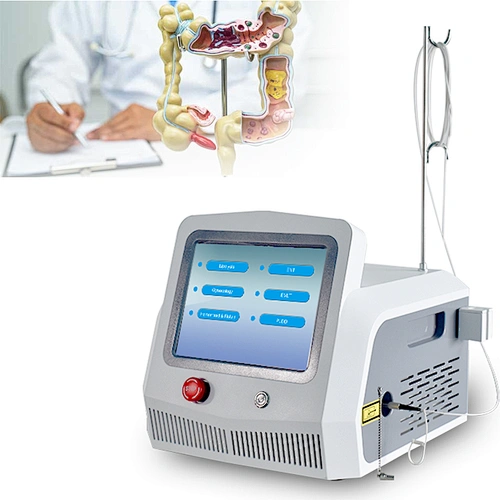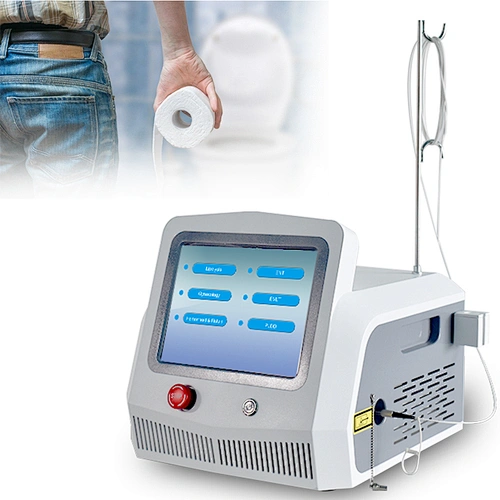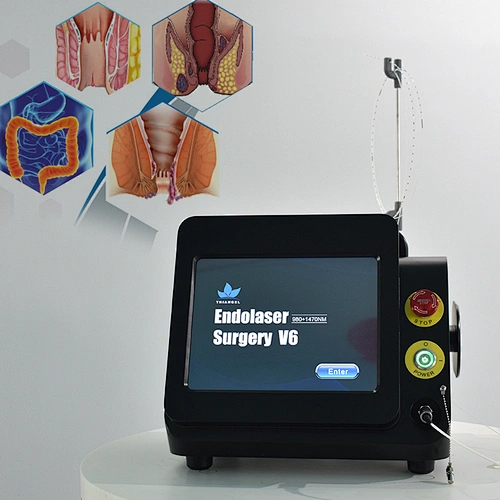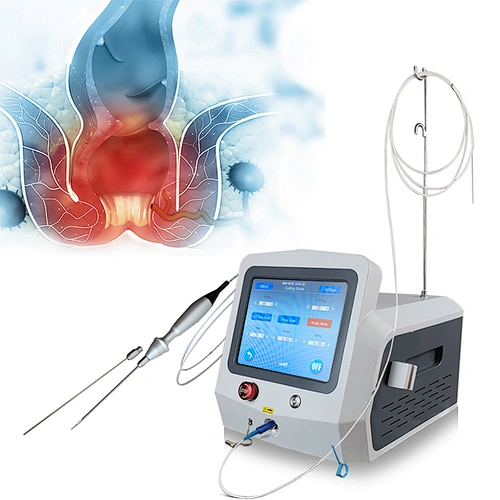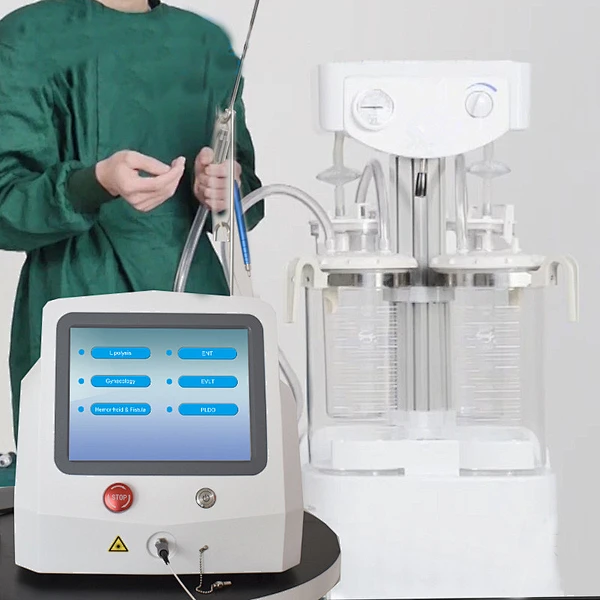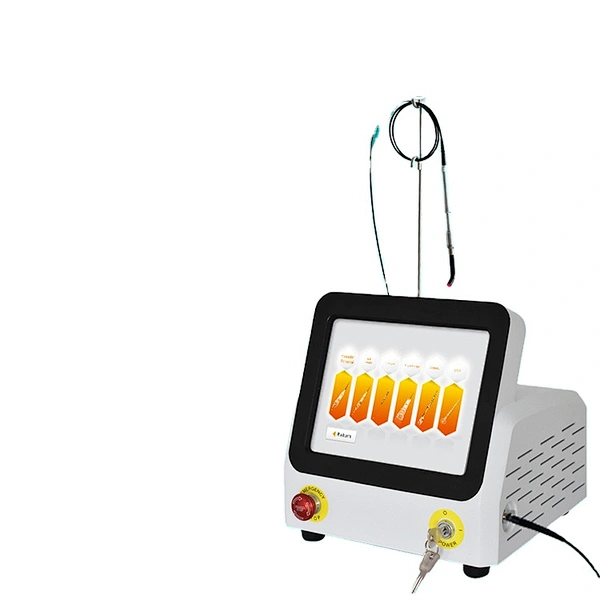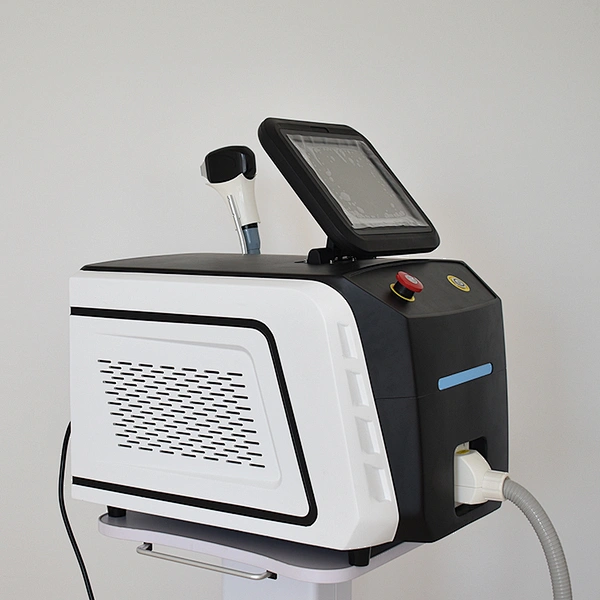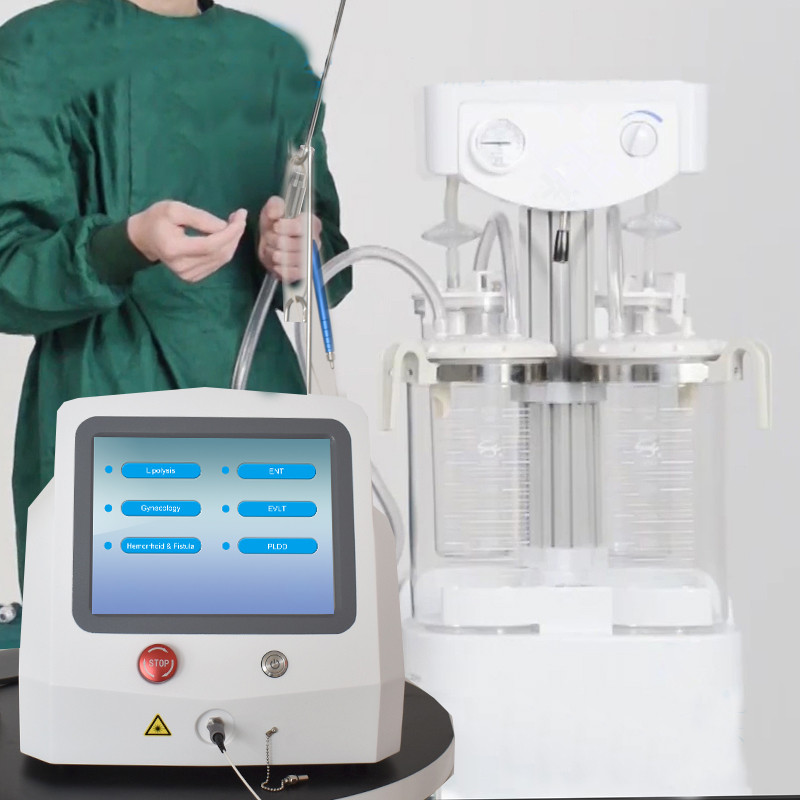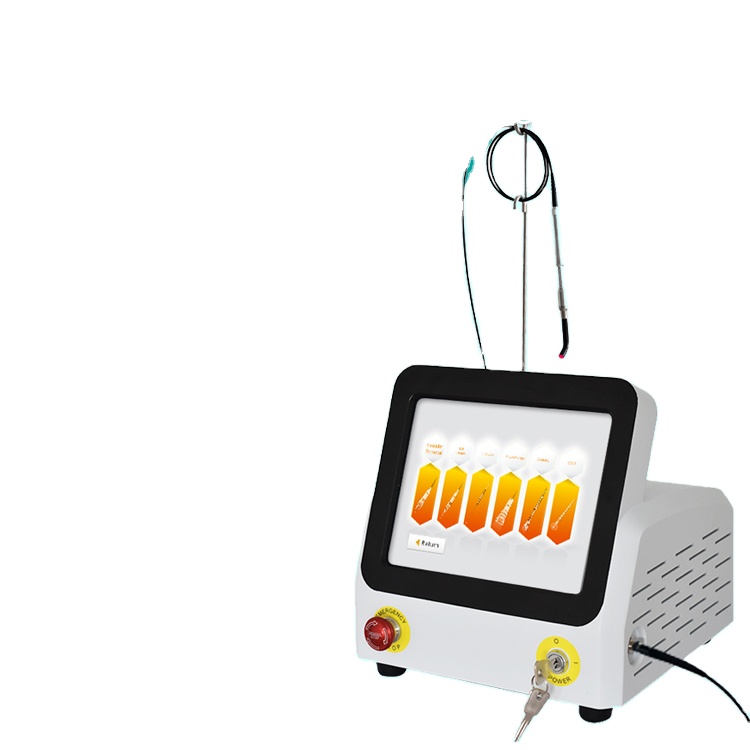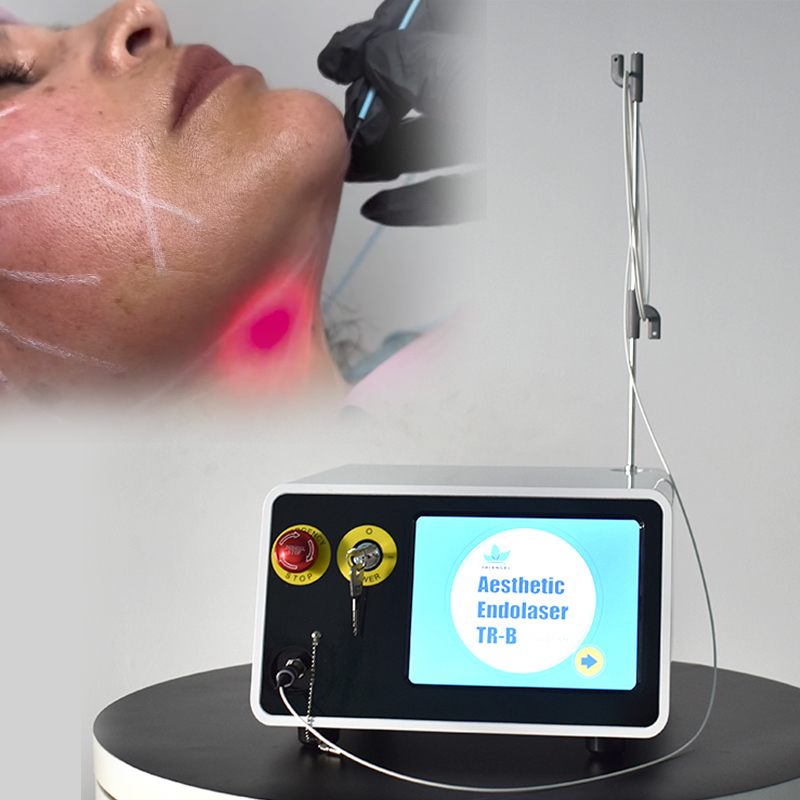
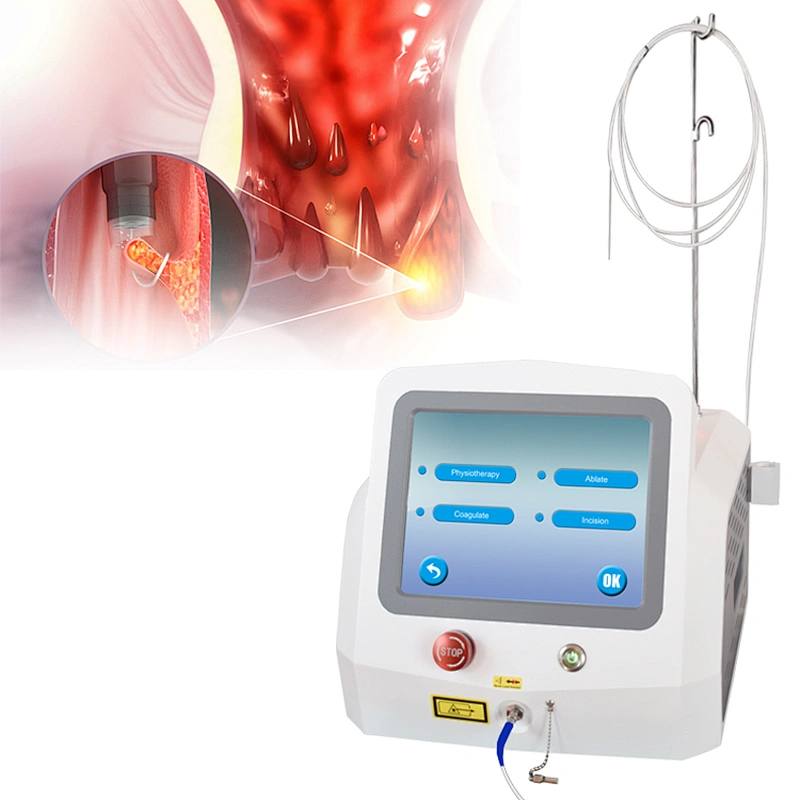
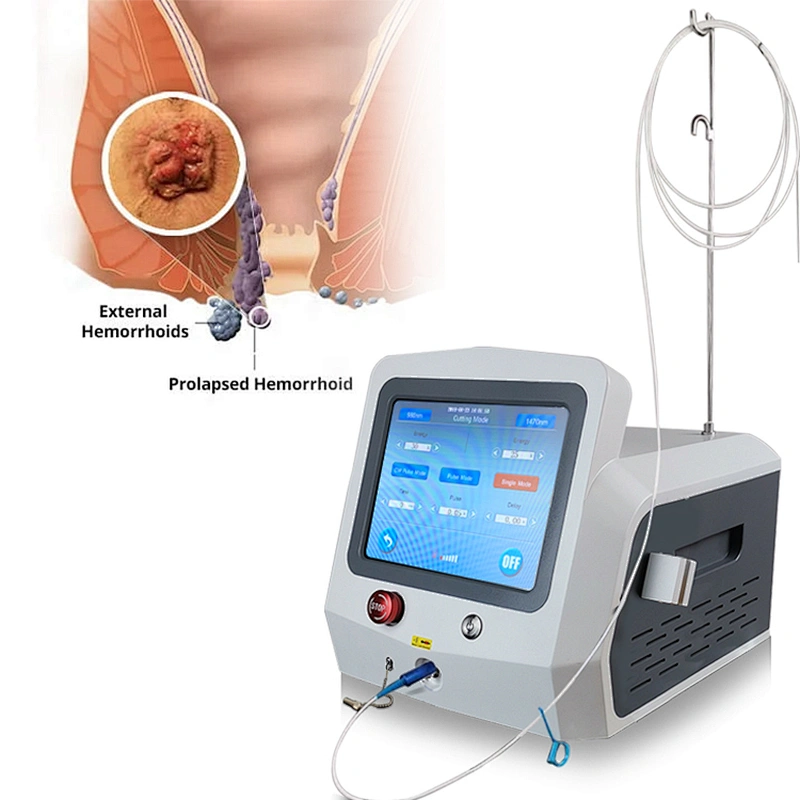
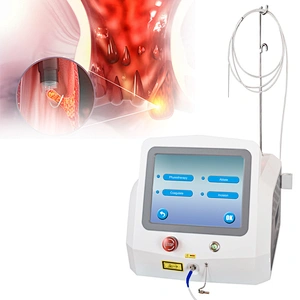
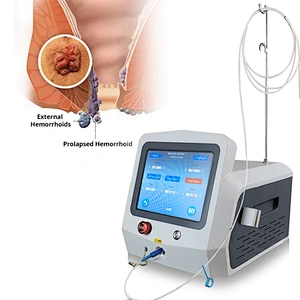
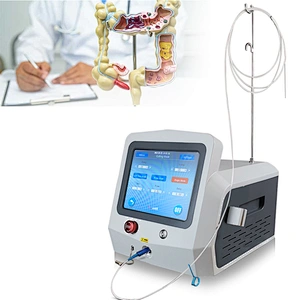
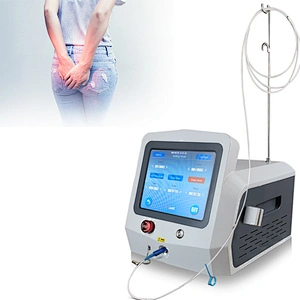
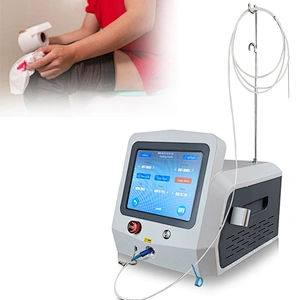

Triangelaser diode laser platform Laseev
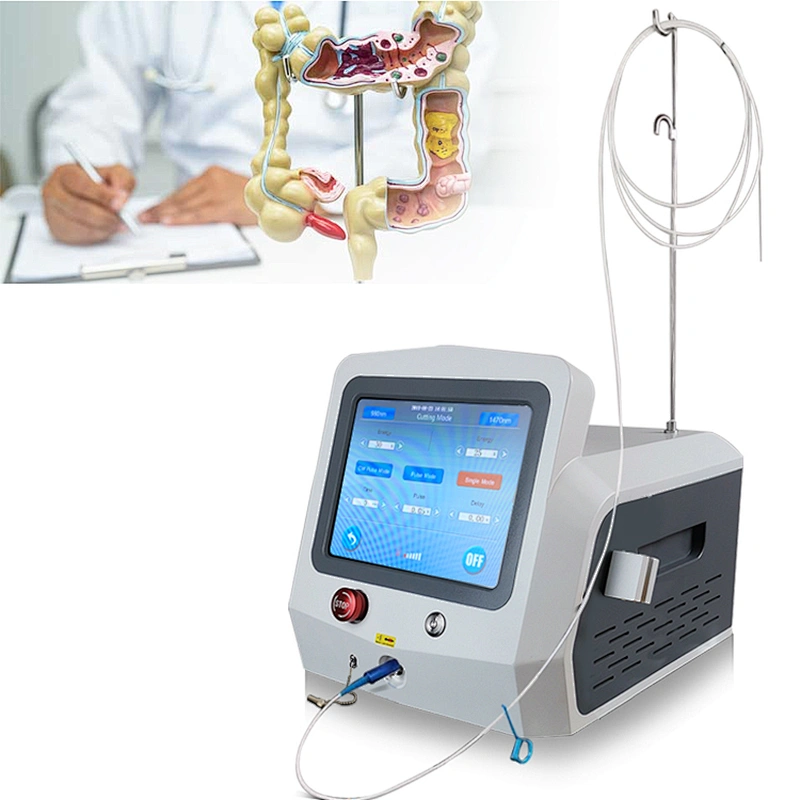
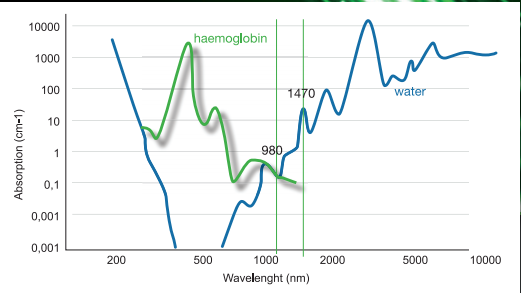
DUAL is based on the excellent absorption characteristics of the wavelengths 980nm and 1470nm. The combination of the two
wavelengths enables a tissue interaction in both hemoglobin (980nm) and water (1470nm). Together with the moderate tissue
penetration, a minimally invasive, safe and precise treatment in extremely delicate anatomic structures is guaranteed.
- place of origin:Beijing, China
- brand name:TAZLASER
- model number:Laseev
- q-switch:NO
- laser type:diode laser
- style:PORTABLE
- type:laser
- feature:laser Hemorrhoids invasive laser therapies, Hemorrhoids(piles), Proctology, Anal Fistula
- application:For Commercial
- after-sales service provided:Free spare parts, Online support, Video technical support
- warranty:1 Year
- Language:english, French, German, Italian, Japanese, Portuguese, RUSSIAN, Spanish, Chinese, KOREAN
- Strength:high
- Power:29w, 1-30W for 980nm,1-17Wfor 1470nm
- Technology:diode laser
- Cooling system:Air Cooling, Air Clooing
- Wavelengths:980nm1470nm
- power modes:Pulsed, Continuous
- Wavelength:980+1470nm
- Function:Hemorrhoids
- Product name:980+1470nm Laser Machine
- Screen:8.4 Inch Color Touch Screen
- Net weight:8.45kg
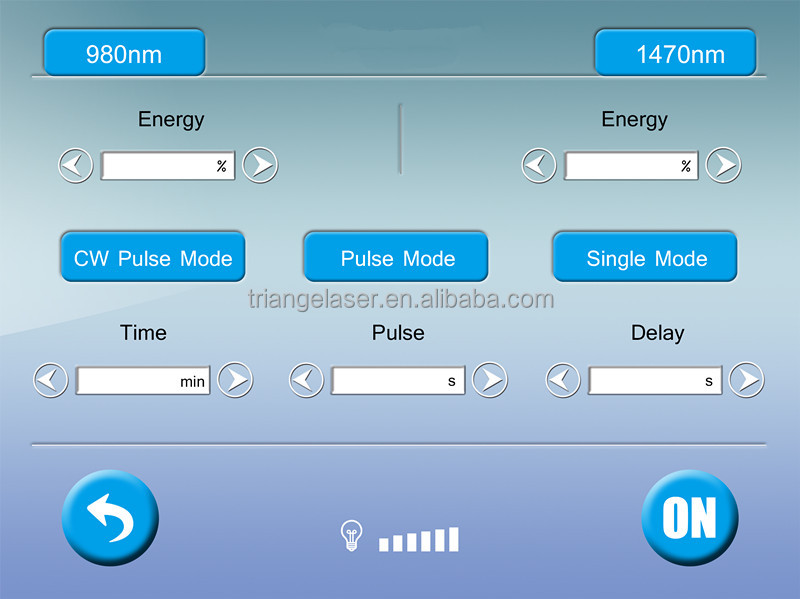
- Working Mode:CW and Pulse,single Mode
- Pulse/Delay:0.00s-1.00s
- Certification:ISO13485/9001/ce
2025 Hot Selling Proctology 980nm1470nm Diode Laser Cutting Hemorrhoids Piles & Anal Fistula Machine
Products Description
Model | Laseev 980nm+1470nm |
Laser type | Diode Laser Gallium-Aluminum-Arsenide GaAlAs |
Wavelength | 980nm+1470nm |
Output Power | 47w 77W |
Working modes | CW, Pulse and Single |
Pulse | 0.01-1s |
Delay | 0.01-1s |
Indication light | 650nm,intensity control |
Fiber | 600 (bare fiber) |
Using TRIANGEL Laseev, the surgeons can either use a single wavelength or both, based on the ailment and the treatment plan.Either way, the device offers precise incision, excision, vaporisation, haemostasis, and tissue coagulation.
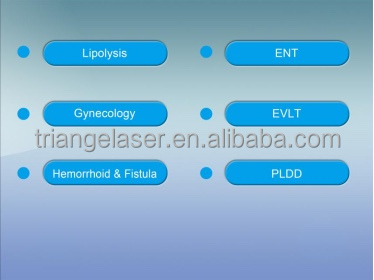
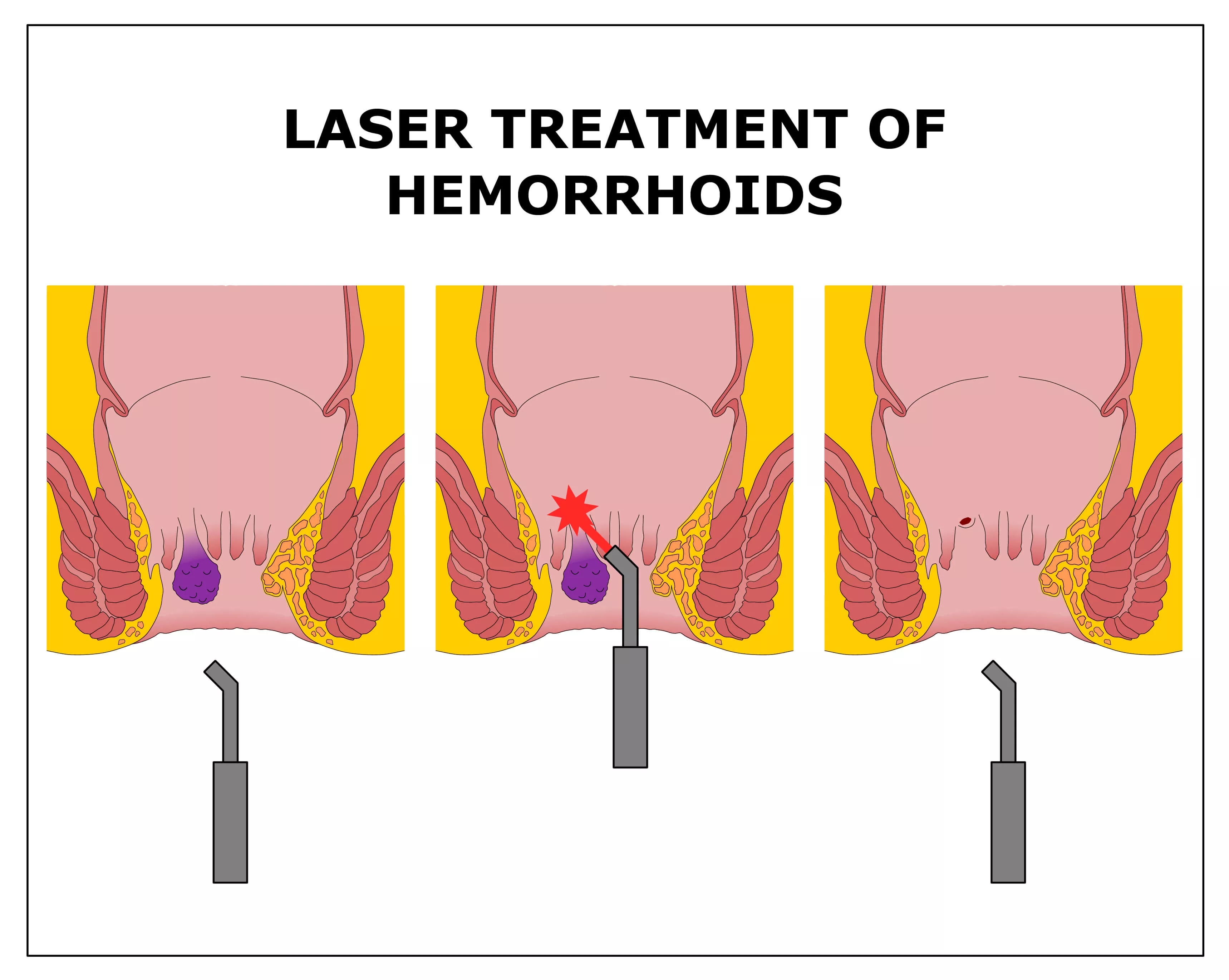
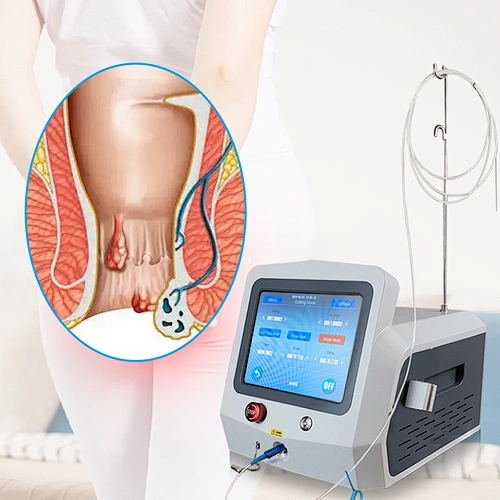
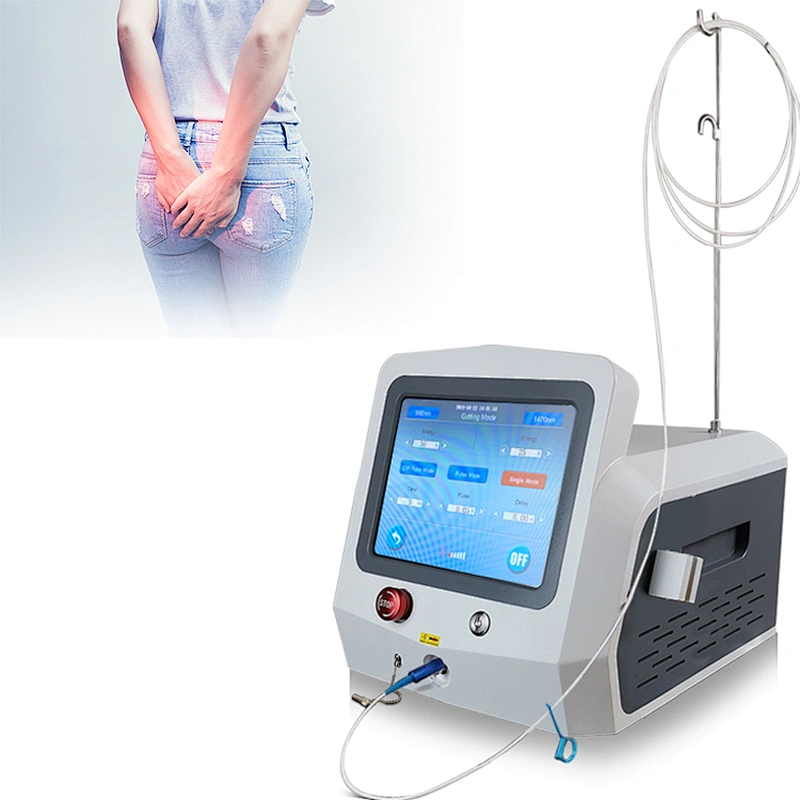
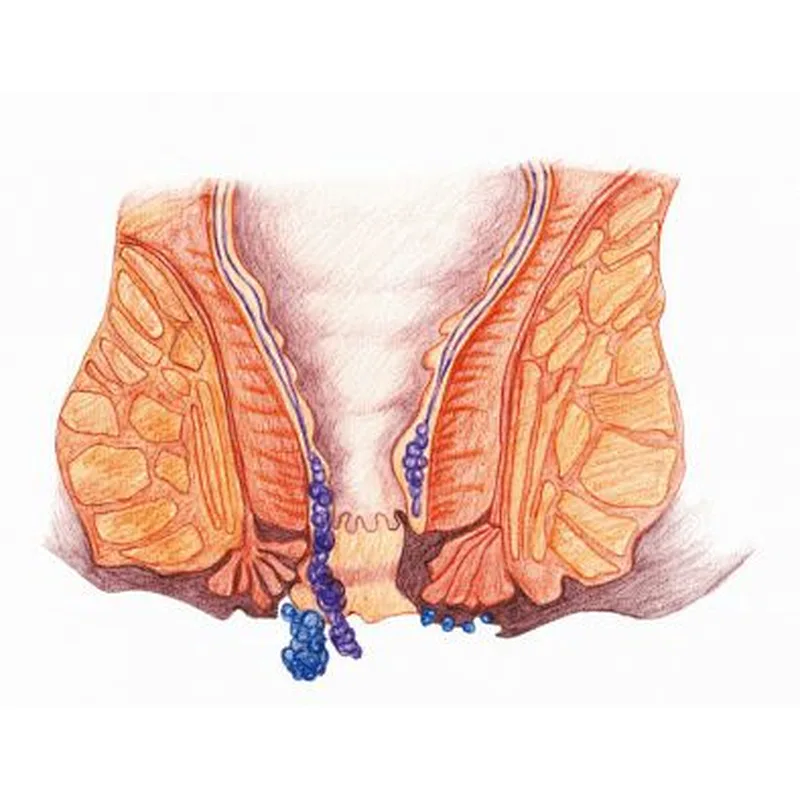
Hemorrhoids are swollen veins in the lowest part of your rectum and anus. They occur when the blood vessel walls stretch and thin and allow the veins to bulge and become irritated. Internal hemorrhoids usually cannot be seen, as they are far inside the rectum.
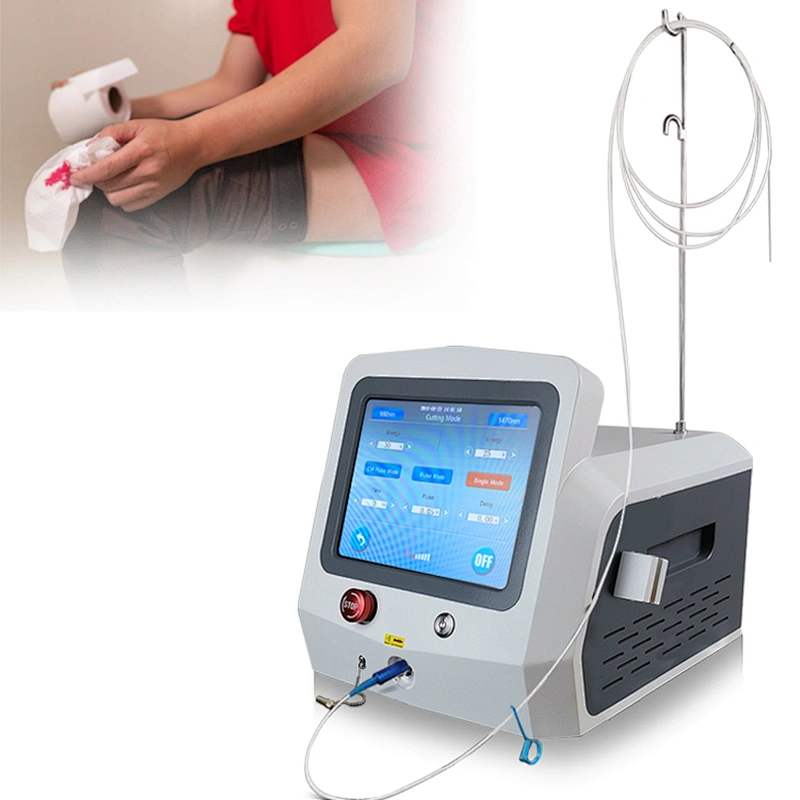
The only way a person knows they have them is from bleeding. External hemorrhoids are under the skin around the anus. Due to the many nerves in this area, external hemorrhoids usually hurt.There is a genetic predisposition toward getting hemorrhoids.
The only way a person knows they have them is from bleeding. External hemorrhoids are under the skin around the anus. Due to the many nerves in this area, external hemorrhoids usually hurt.There is a genetic predisposition toward getting hemorrhoids.
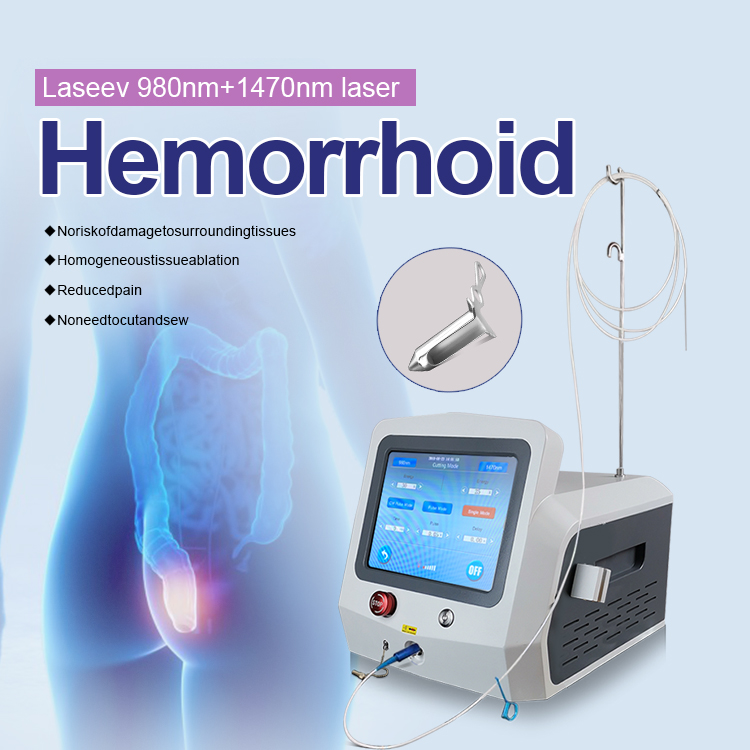
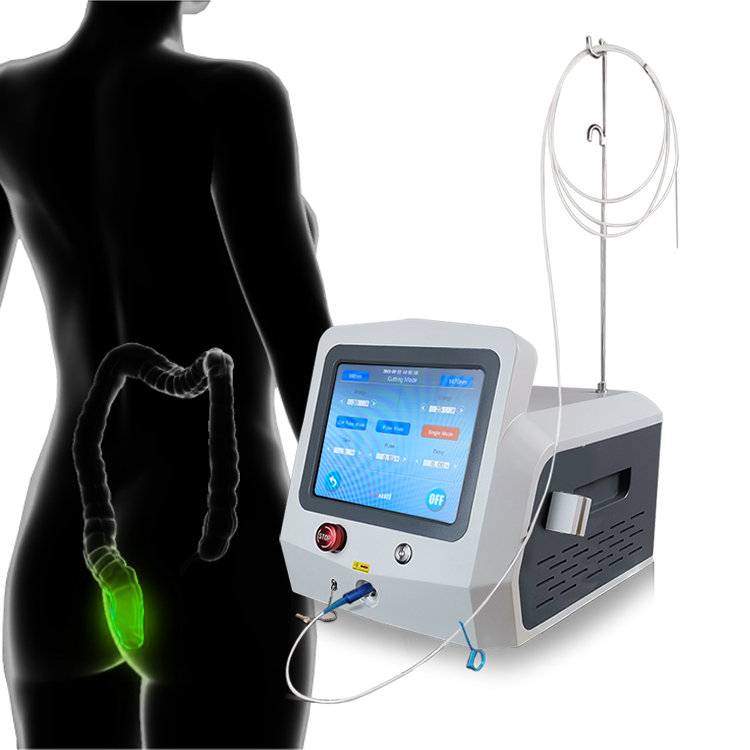
Triangel 980nm 1470 Laser Machine is a safe and highly reliable system for anal surgery with perfect results in hemostasis, cutting and coagulation. The system is completely portable and has different hands to manipulate the fiber. Hemorrhoids, polyps and anal fissures are very common diseases in the population. In many cases, they can cause very uncomfortable and embarrassing symptoms, causing patients to turn to medical professionals for quick and effective solutions to relieve pain and improve their quality of life.
Hemorrhoid Outpatient Treatment
State-of-the-art proctology units now have the ultimate surgical laser technology for treating rectal lesions: the Triangel 980nm 1470 . This advanced platform cuts, coagulates and vaporizes tissue in a controlled manner without bleeding and with minimal damage to the surrounding area, Thereby reducing inflammation and surgical trauma.
Triangel 980nm 1470 is less invasive than traditional proctology surgery and has many advantages in proctology applications: more patient comfort, surgery is outpatient, no general anesthesia is required, postoperative pain is reduced, and recovery is faster. Wide range of applications
Triangel 980nm 1470 is expressed in:
Hemorrhoidectomy
Anal fissure and inversion coagulation
anal fissure resection
anal stenosis ablation
pilonidal cyst
condyloma acuminatum
Colon polyposis
villous adenoma
Acquired and Congenital Fistulas and TumorsLHP for hemorrhoids - laser hemorrhoidoplasty
Piles Intrahemorrhoidal Therapy
Under LA/GA, laser energy is delivered by conical fiber directly to hemorrhoidal nodes and they will obliterate from inside and this will help to preserve mucosa and sphincter structure to an extremely high precision. Laser energy is used to close off the blood supply nourishing the abnormal growth. The laser energy induces destruction of the venous epithelium and simultaneous obliteration of the hemorrhoidal pile by a shrinkage effect.
Advantage of using laser compare to conventional surgery, fibrotic reconstruction generates new connective tissue, which ensures that the mucosa adheres to the underlying tissue. This also prevents the occurrence or recurrence of prolapsed hemorrhoids. The laser procedure can be executed in only a few minutes.
Hemorrhoid Outpatient Treatment
State-of-the-art proctology units now have the ultimate surgical laser technology for treating rectal lesions: the Triangel 980nm 1470 . This advanced platform cuts, coagulates and vaporizes tissue in a controlled manner without bleeding and with minimal damage to the surrounding area, Thereby reducing inflammation and surgical trauma.
Triangel 980nm 1470 is less invasive than traditional proctology surgery and has many advantages in proctology applications: more patient comfort, surgery is outpatient, no general anesthesia is required, postoperative pain is reduced, and recovery is faster. Wide range of applications
Triangel 980nm 1470 is expressed in:
Hemorrhoidectomy
Anal fissure and inversion coagulation
anal fissure resection
anal stenosis ablation
pilonidal cyst
condyloma acuminatum
Colon polyposis
villous adenoma
Acquired and Congenital Fistulas and TumorsLHP for hemorrhoids - laser hemorrhoidoplasty
Piles Intrahemorrhoidal Therapy
Under LA/GA, laser energy is delivered by conical fiber directly to hemorrhoidal nodes and they will obliterate from inside and this will help to preserve mucosa and sphincter structure to an extremely high precision. Laser energy is used to close off the blood supply nourishing the abnormal growth. The laser energy induces destruction of the venous epithelium and simultaneous obliteration of the hemorrhoidal pile by a shrinkage effect.
Advantage of using laser compare to conventional surgery, fibrotic reconstruction generates new connective tissue, which ensures that the mucosa adheres to the underlying tissue. This also prevents the occurrence or recurrence of prolapsed hemorrhoids. The laser procedure can be executed in only a few minutes.
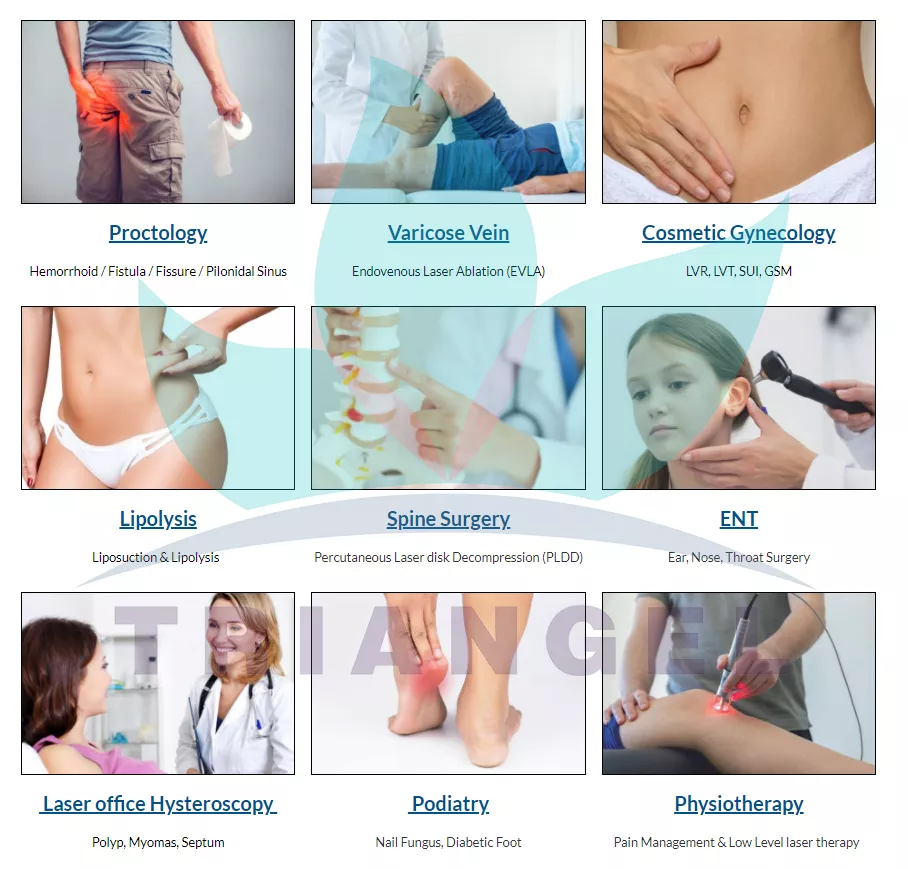
Dual Wavelength Laser Diode: Most Versatile Medical Laser in the Market
Dual Wavelength (1470 nm-17W + 980 nm-30W). This device has been proven to be one of the most innovative surgical tools, ready to be used for a wide scope of clinical applications.
The most important feature of this laser diode is its dual wavelength which allows it to be used for a variety of tissue interactions. While the 980 nm wavelength has a great affinity for pigments like haemoglobin, the 1470 nm has great affinity for water.
Using this device, the surgeons can either use a single wavelength or both, based on the ailment and the treatment plan. Either way, the device offers precise incision, excision, vaporisation, haemostasis, and tissue coagulation. The device can be used in two modes: CW/PW. Now the surgeons can control the extent to which the laser beam is absorbed by surrounding tissue.
These advanced settings give a lot of freedom to the medical practitioners thus allowing them to choose the wavelengths and the modes based on the case. This level of freedom enables the doctors to perform the procedures with lesser stress, thus providing great results and improving the success rate of the treatment.
Dual Wavelength (1470 nm-17W + 980 nm-30W). This device has been proven to be one of the most innovative surgical tools, ready to be used for a wide scope of clinical applications.
The most important feature of this laser diode is its dual wavelength which allows it to be used for a variety of tissue interactions. While the 980 nm wavelength has a great affinity for pigments like haemoglobin, the 1470 nm has great affinity for water.
Using this device, the surgeons can either use a single wavelength or both, based on the ailment and the treatment plan. Either way, the device offers precise incision, excision, vaporisation, haemostasis, and tissue coagulation. The device can be used in two modes: CW/PW. Now the surgeons can control the extent to which the laser beam is absorbed by surrounding tissue.
These advanced settings give a lot of freedom to the medical practitioners thus allowing them to choose the wavelengths and the modes based on the case. This level of freedom enables the doctors to perform the procedures with lesser stress, thus providing great results and improving the success rate of the treatment.
Detailed Itroduction:
Lasers can be used for hemorrhoid treatment in multiple ways, but the idea behind each is that the laser's energy is used to makethe hemorrhoidal tissue go away over a period of time, or it is used to remove the tissue immediately. These methods includecoagulation, in which the hemorrhoid is shrunk from within, and hemorrhoidectomy, in which the affected tissue is sliced off.
There is also ablation, which is a process in which the tissue is destroyed. This forms scar tissue at the site, which can hinderthe chance of new hemorrhoids forming there. Ablation is considered a nonsurgical approach to treating hemorrhoids. Typically, it is recommended to try nonoperative methods like this for mid-grade hemorrhoids before resorting to surgical procedures. A patient may receive laser treatment that includes only one of these methods, or the doctor may choose to use a mix of laser procedures to provide relief to the patient.
Lasers can be used for hemorrhoid treatment in multiple ways, but the idea behind each is that the laser's energy is used to makethe hemorrhoidal tissue go away over a period of time, or it is used to remove the tissue immediately. These methods includecoagulation, in which the hemorrhoid is shrunk from within, and hemorrhoidectomy, in which the affected tissue is sliced off.
There is also ablation, which is a process in which the tissue is destroyed. This forms scar tissue at the site, which can hinderthe chance of new hemorrhoids forming there. Ablation is considered a nonsurgical approach to treating hemorrhoids. Typically, it is recommended to try nonoperative methods like this for mid-grade hemorrhoids before resorting to surgical procedures. A patient may receive laser treatment that includes only one of these methods, or the doctor may choose to use a mix of laser procedures to provide relief to the patient.
Treatment Effect
Laser Haemorrhoids,a nearly painless minimally-invasive treatment for haemorrhoids
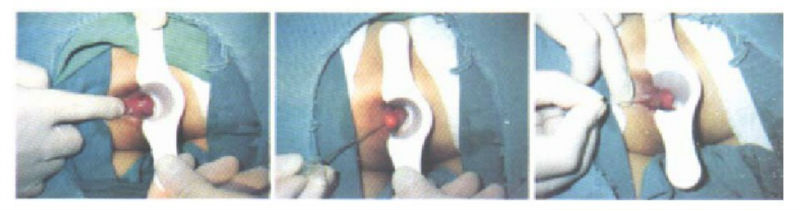
(1)The laser fiber is inserted in the centre of the hemorrhoids under direct vision.
(2)Each haemorrhoids is shrunk from within in a controlled manner, by means of laser energy. Blood supply to the enlarged haemorrhoids is cut off.
(3)Haemorrhoids shrink and slowly regress as a result of the treatment.
(1)The laser fiber is inserted in the centre of the hemorrhoids under direct vision.
(2)Each haemorrhoids is shrunk from within in a controlled manner, by means of laser energy. Blood supply to the enlarged haemorrhoids is cut off.
(3)Haemorrhoids shrink and slowly regress as a result of the treatment.

Products Advantages
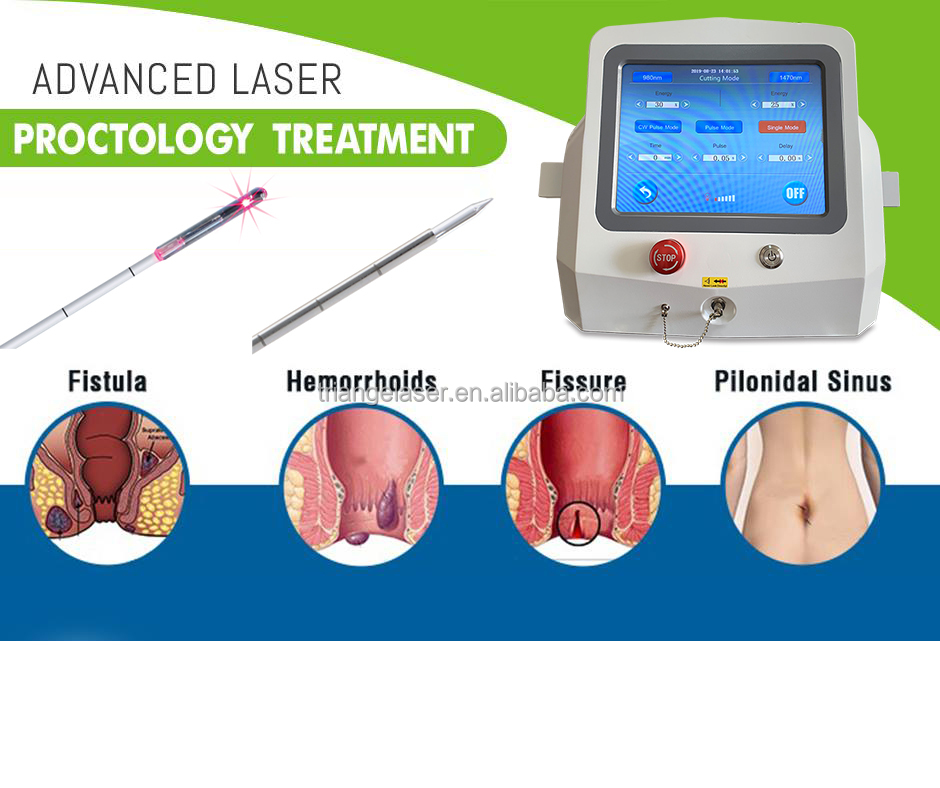
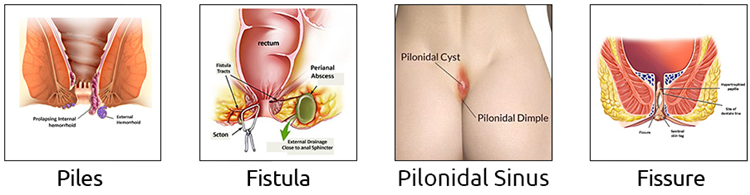
TRIANGEL Laseev is one of the most advanced laser machines used for treatment of proctological maladies such as piles, fissure, fistula and pilonidal sinuses.
The usage of TRIANGEL Laseev 980nm 1470nm Laser for Proctology is a win-win situation for both the patients and the surgeon. While it makes the procedure simpler and less painful for the patients, it also created a more workable environment for the surgeons in the operating room.
The usage of TRIANGEL Laseev 980nm 1470nm Laser for Proctology is a win-win situation for both the patients and the surgeon. While it makes the procedure simpler and less painful for the patients, it also created a more workable environment for the surgeons in the operating room.
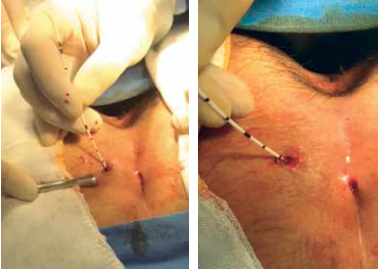
1.Fistula laser closure.
(laser closure of fistula)
One of the latest technologies for the treatment of anorectal fistulas, minimally invasive and without the risk of incontinence. It is almost always an outpatient procedure.
For this technique, a laser probe is inserted from the outer hole to the inner hole through the fistula. The probe fires a laser beam at a 360º angle, causing the fistula to close. Slowly withdraw the tube while firing until it is completely removed.
In many cases, it is recommended to close the internal orifice with sutures or by replacing a piece of healthy tissue close to the internal orifice (advance flap).
After surgery, a diet rich in water, fruits, and vegetables is required, along with common pain relievers for discomfort and a sitz bath. Fluid oozes out of the fistula for a few days.
(laser closure of fistula)
One of the latest technologies for the treatment of anorectal fistulas, minimally invasive and without the risk of incontinence. It is almost always an outpatient procedure.
For this technique, a laser probe is inserted from the outer hole to the inner hole through the fistula. The probe fires a laser beam at a 360º angle, causing the fistula to close. Slowly withdraw the tube while firing until it is completely removed.
In many cases, it is recommended to close the internal orifice with sutures or by replacing a piece of healthy tissue close to the internal orifice (advance flap).
After surgery, a diet rich in water, fruits, and vegetables is required, along with common pain relievers for discomfort and a sitz bath. Fluid oozes out of the fistula for a few days.
2.
anal fissure
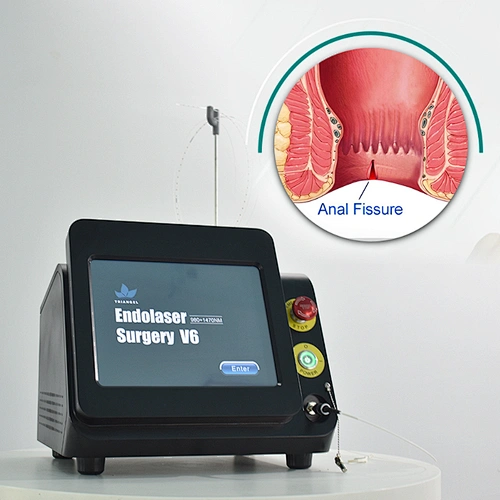
Anal fissure is one of the most frequent proctological ailments.
Sometimes burning pain that coincides with evacuation and bleeding are the characteristic symptoms of anal fissure or anal ulcer.
It is generally associated with a picture of constipation and effort to evacuate that certainly causes a wound (fissure) in the anal wall.
Its treatment is normally surgical (closed sphincterotomy), in most cases it is an outpatient procedure that offers magnificent results
Anal fissure is one of the most frequent proctological ailments.
Sometimes burning pain that coincides with evacuation and bleeding are the characteristic symptoms of anal fissure or anal ulcer.
It is generally associated with a picture of constipation and effort to evacuate that certainly causes a wound (fissure) in the anal wall.
Its treatment is normally surgical (closed sphincterotomy), in most cases it is an outpatient procedure that offers magnificent results
3.How to prepare for anal laser surgery?
Some preparations may be required before the FiLaC procedure, including a rectal enema the day before the procedure, preparing the bowel for the procedure and preparing the fistula itself. This may involve probing the fistula with a catheter, flushing it with saline, and excising the internal opening to place a musculomucosal flap in place
Some preparations may be required before the FiLaC procedure, including a rectal enema the day before the procedure, preparing the bowel for the procedure and preparing the fistula itself. This may involve probing the fistula with a catheter, flushing it with saline, and excising the internal opening to place a musculomucosal flap in place
Company Profile
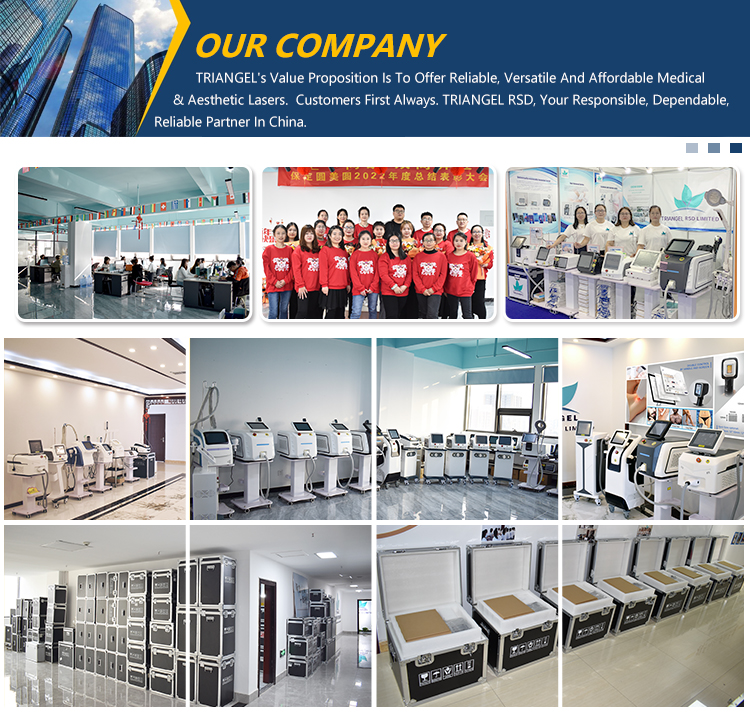
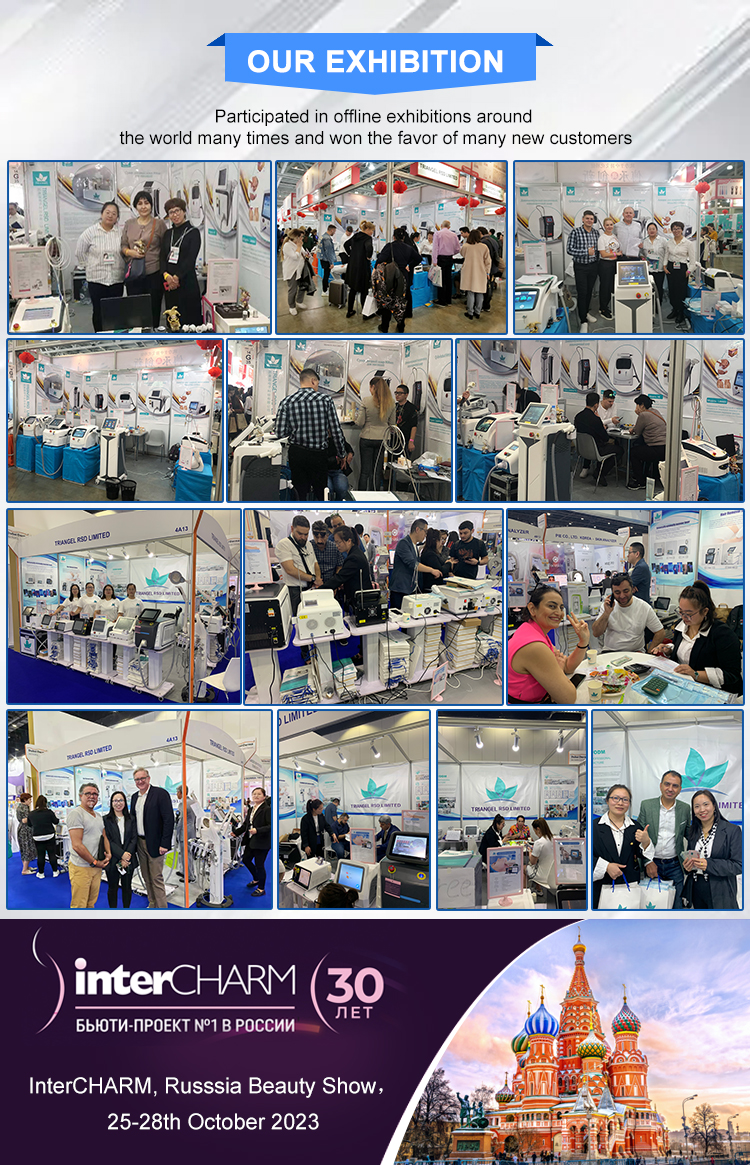
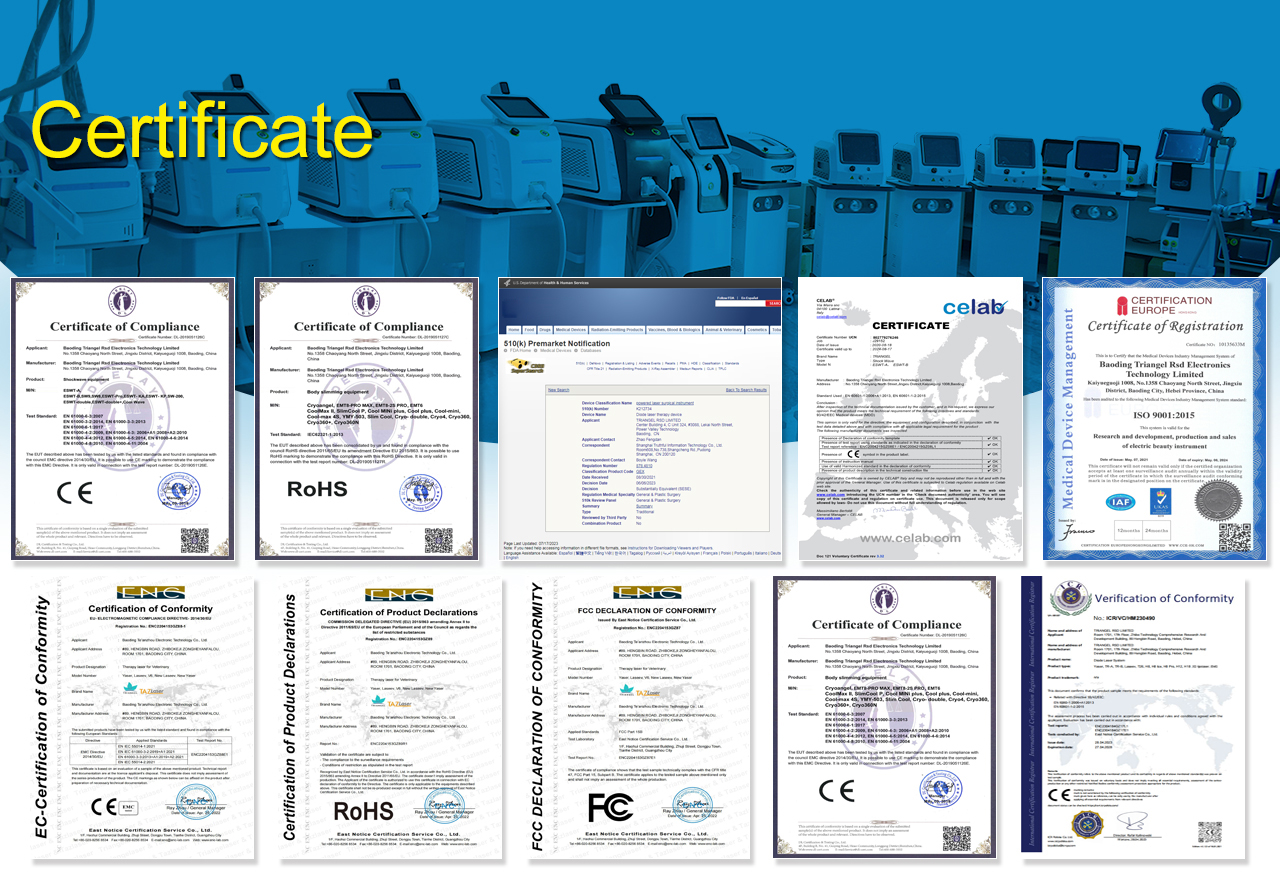
BAODING TAZLASER ELECTRONICS TECHNOLOGY LIMITED,is one of the specialized manufactures focused on the Aesthetics & Medical laser equipment in China,established in March 2010.We have our own repair companies & training centers in several countries,like Portugal,Russia,Australia,South Africa...could offer the technical support and clinical training in the fast and efficient way. TRIANGEL got different certificates for clients from all over the world.Medical CE,ISO13485, RoHS;We also take part in exhibitions every year,Cosmoprof Asia(HongKong),DUBAI DERMA,INTERCHARM(Moscow),Expocosmetica(Oporto),AMSCA(South Africa)...
TRIANGEL,hope to be your Responsible,Sincere and Dependable partner in China!
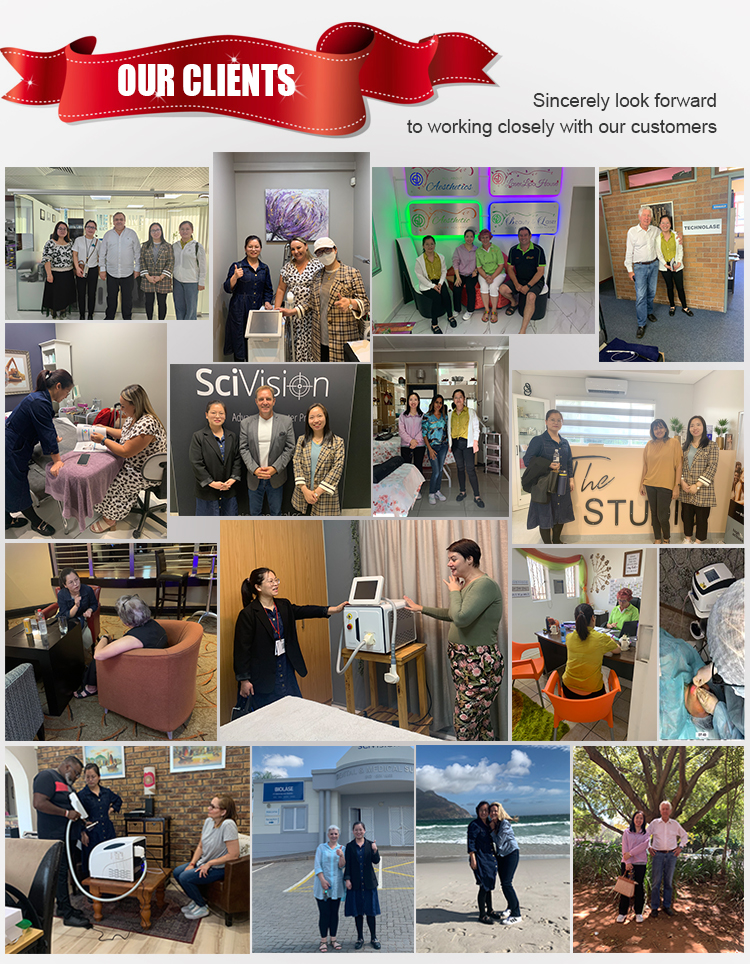
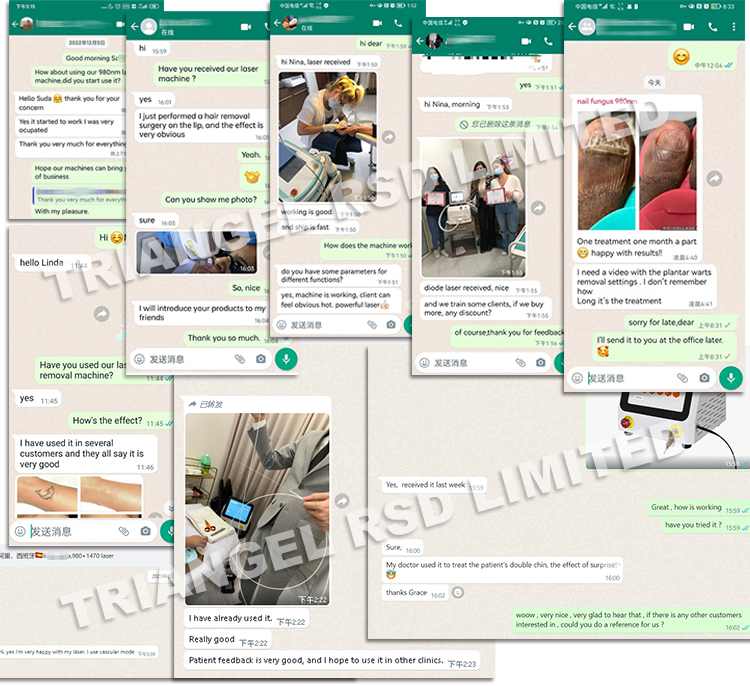
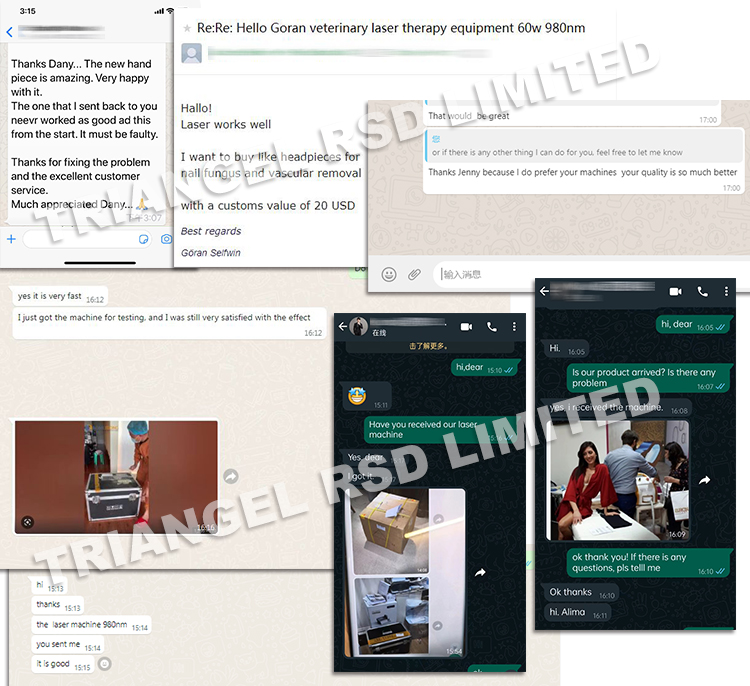
Customer Feedback
FAQ
1. Which grade of haemorrhoids is suitable for Laser procedure?
Laser is suitable for haemorrhoids from grade 2 to 4.
2. Can I pass motion after Laser Haemorrhoids Procedure?
Yes, you could expect to pass gas and motion as usual after the procedure.
3. What shall I expect after Laser Haemorrhoids Procedure?
Post-operation swelling shall be expected. This is a normal phenomenon, due to heat generated by laser from inside of the haemorrhoid. Swelling is usually painless, and will subside after a few days. You might be given medication or Sitz-bath to help in reducing the swelling, please do it as per instructions by the doctor/nurse.
4. How long do I need to lie down on bed for recovery?
No, you do not need to lie down for long for recovery purpose. You can perform daily activity as usual but keep it at minimal once you've discharged from hospital. Avoid doing any straining activity or exercise such as weight lifting and cycling within the first three weeks after the procedure.
5. Patients choosing this treatment will benefit from the following advantages:
Minimal or no pain
Fast recovery
No open wounds
No tissue is being cut off
Patient can eat and drink the next day
Patient can expect to pass motion soon after surgery, and usually without pain
Accurate tissue reduction in the haemorrhoid nodes
Maximum preservation of continence
Best possible preservation of sphincter muscle and related structures such as anoderm and mucous membranes.
Laser is suitable for haemorrhoids from grade 2 to 4.
2. Can I pass motion after Laser Haemorrhoids Procedure?
Yes, you could expect to pass gas and motion as usual after the procedure.
3. What shall I expect after Laser Haemorrhoids Procedure?
Post-operation swelling shall be expected. This is a normal phenomenon, due to heat generated by laser from inside of the haemorrhoid. Swelling is usually painless, and will subside after a few days. You might be given medication or Sitz-bath to help in reducing the swelling, please do it as per instructions by the doctor/nurse.
4. How long do I need to lie down on bed for recovery?
No, you do not need to lie down for long for recovery purpose. You can perform daily activity as usual but keep it at minimal once you've discharged from hospital. Avoid doing any straining activity or exercise such as weight lifting and cycling within the first three weeks after the procedure.
5. Patients choosing this treatment will benefit from the following advantages:
Minimal or no pain
Fast recovery
No open wounds
No tissue is being cut off
Patient can eat and drink the next day
Patient can expect to pass motion soon after surgery, and usually without pain
Accurate tissue reduction in the haemorrhoid nodes
Maximum preservation of continence
Best possible preservation of sphincter muscle and related structures such as anoderm and mucous membranes.
Click Here Back To Home