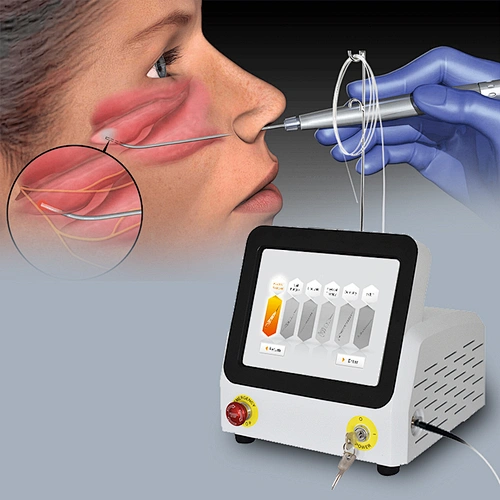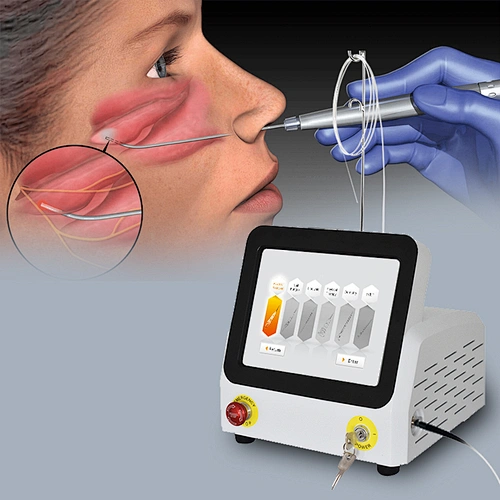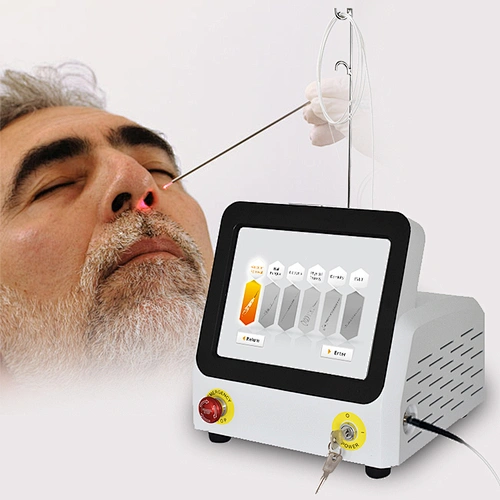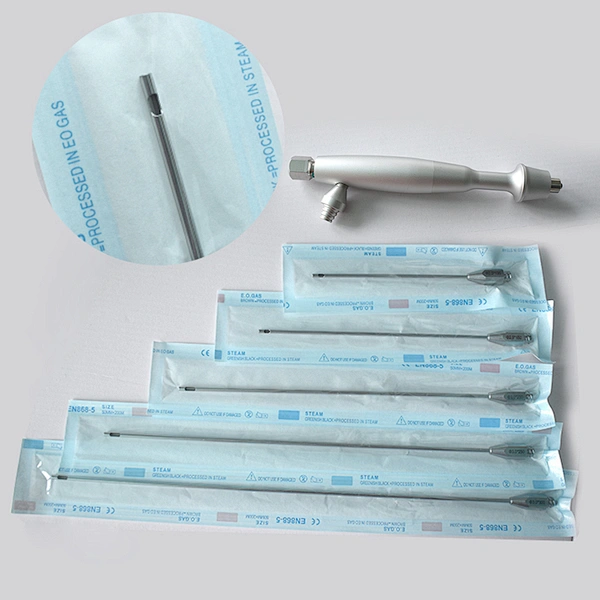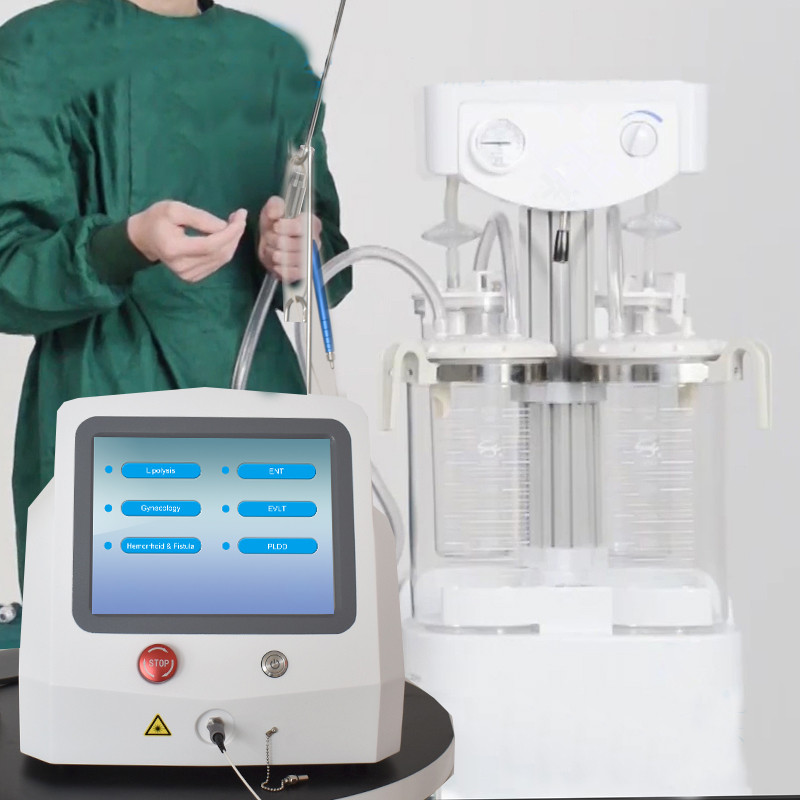
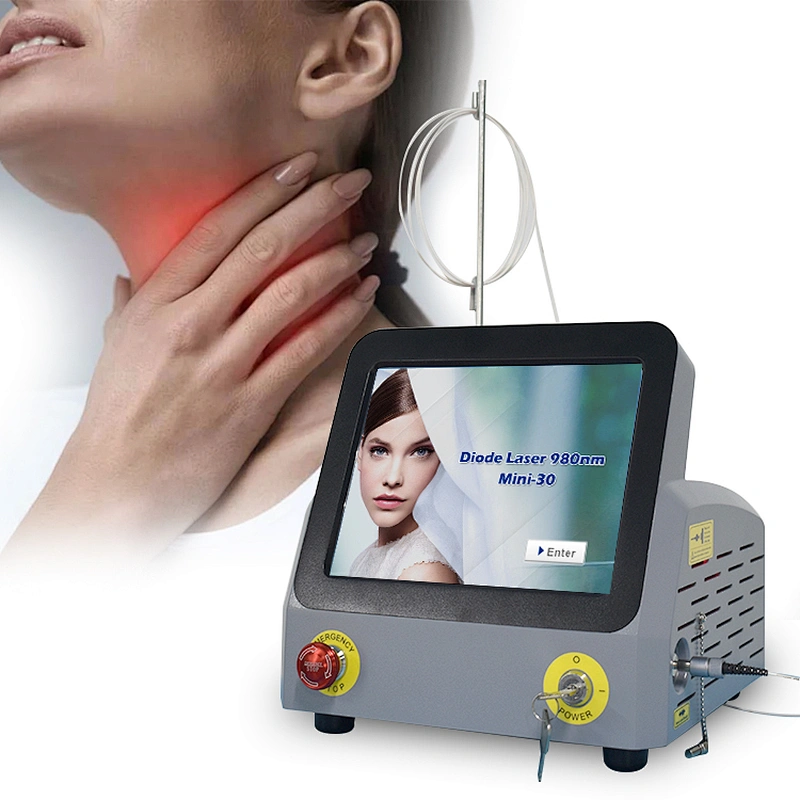
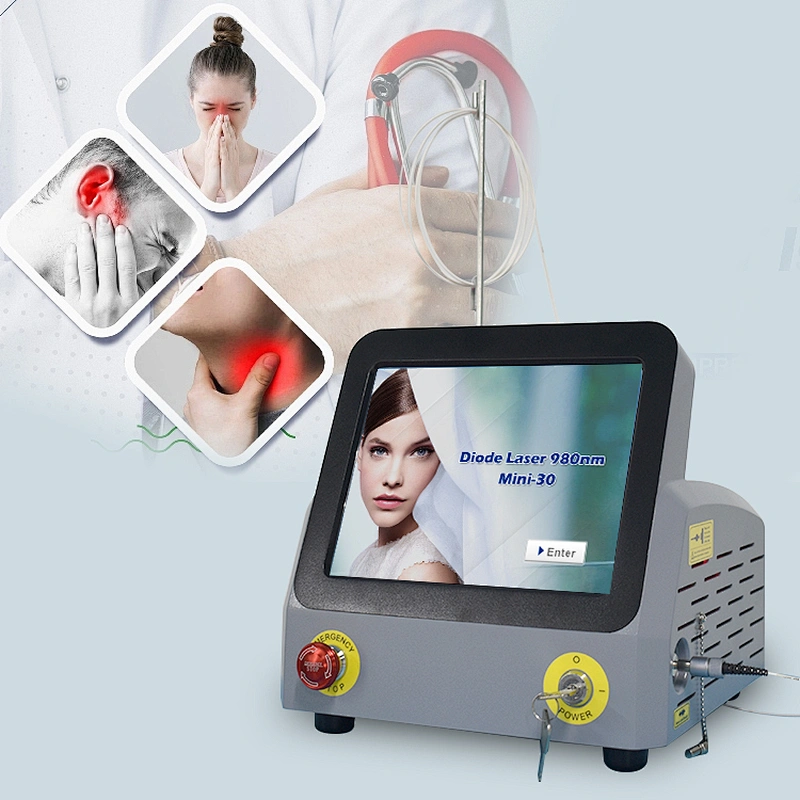
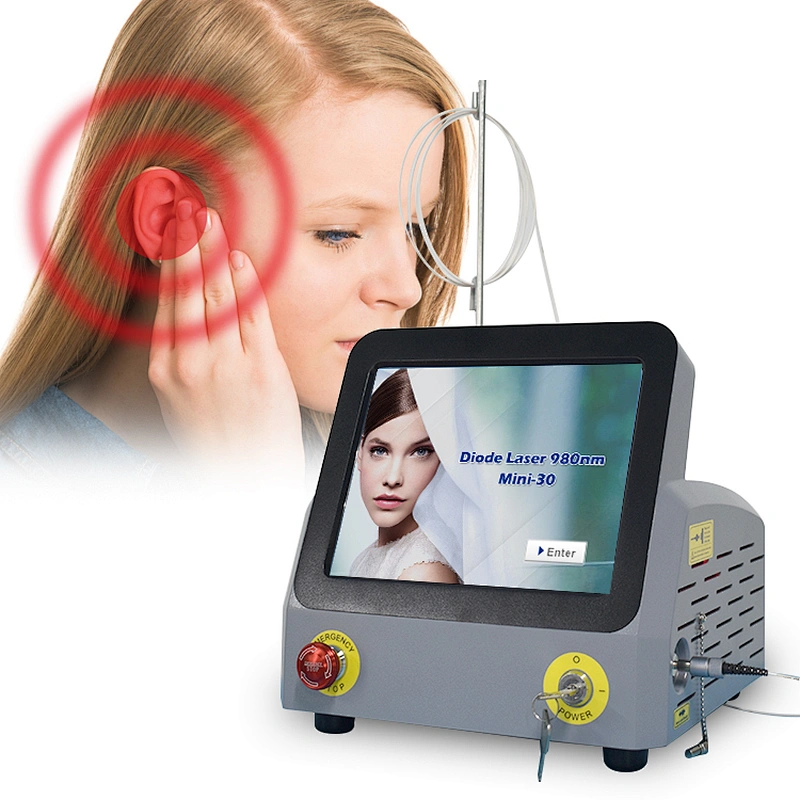
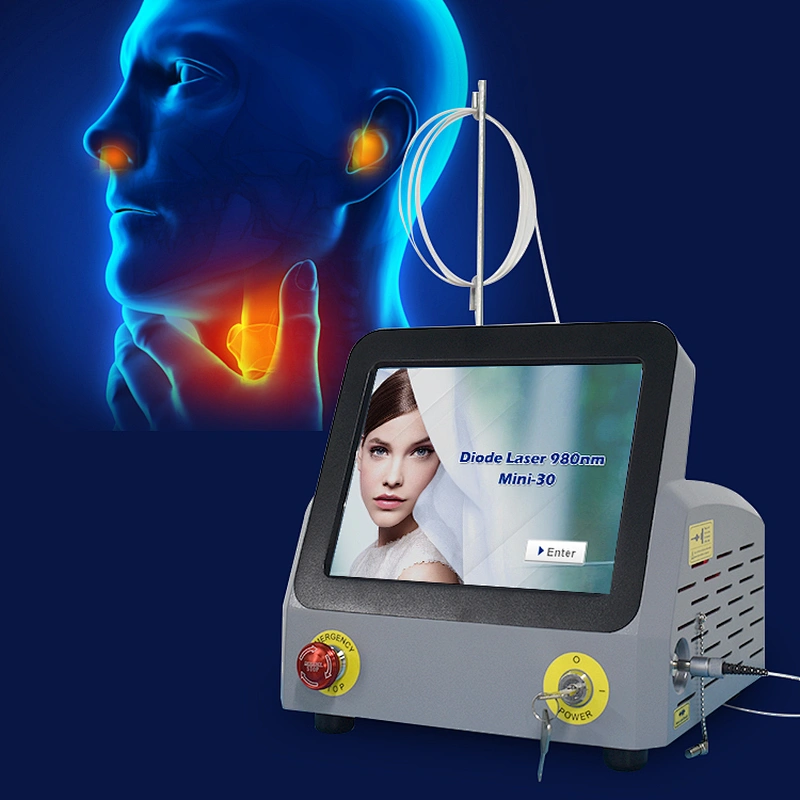


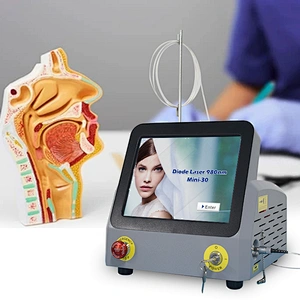
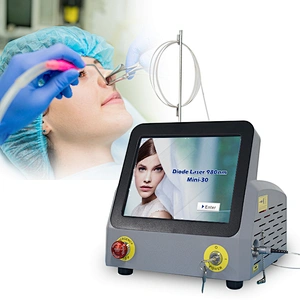
* Low cost
* Bloodless treatment
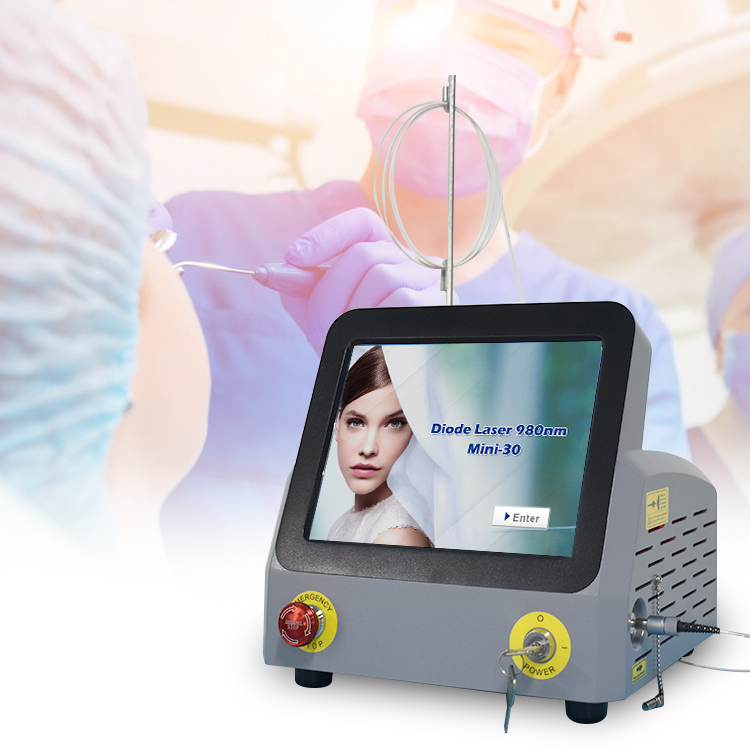
* High precision ablation
* Fast and gentle outpatient treatments
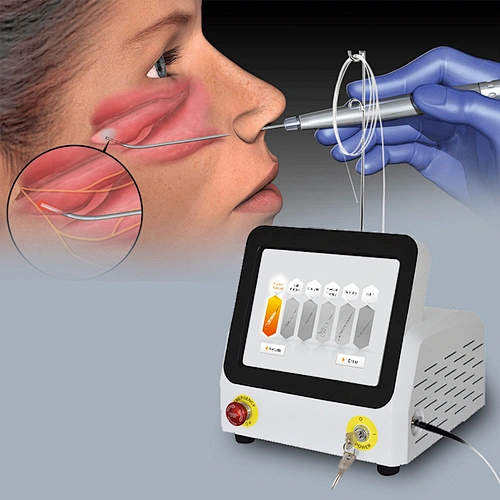
* Mini-invasive surgery through flexible fiber optics
* Easy operation, can be introduced by endoscope
* Enhanced healing
* Less postoperative trouble
- Place of Origin:Beijing, China
- Brand Name:TAZLASER
- Model Number:MINI-30
- Power Source:Electric
- Warranty:1 Year
- After-sale Service:Online technical support
- Material:Plastic
- Shelf Life:1years
- Quality Certification:ce
- Instrument classification:Class II
- Safety standard:MFDS
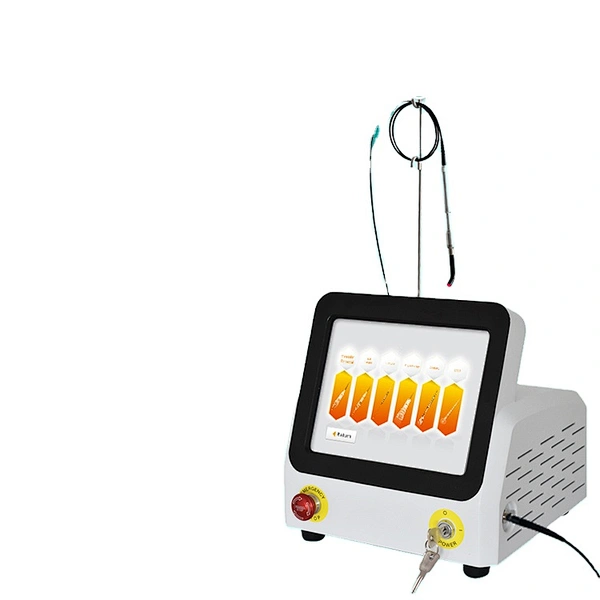
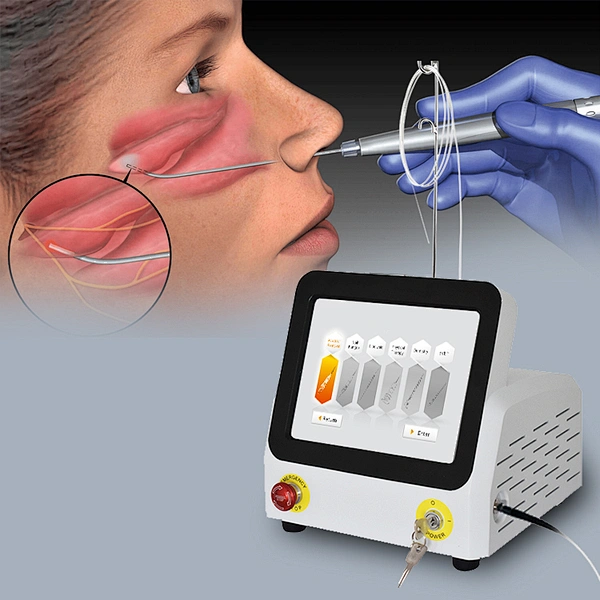
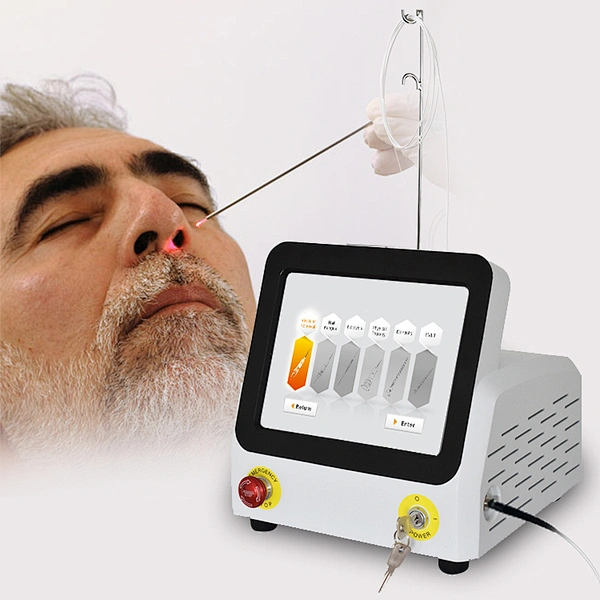
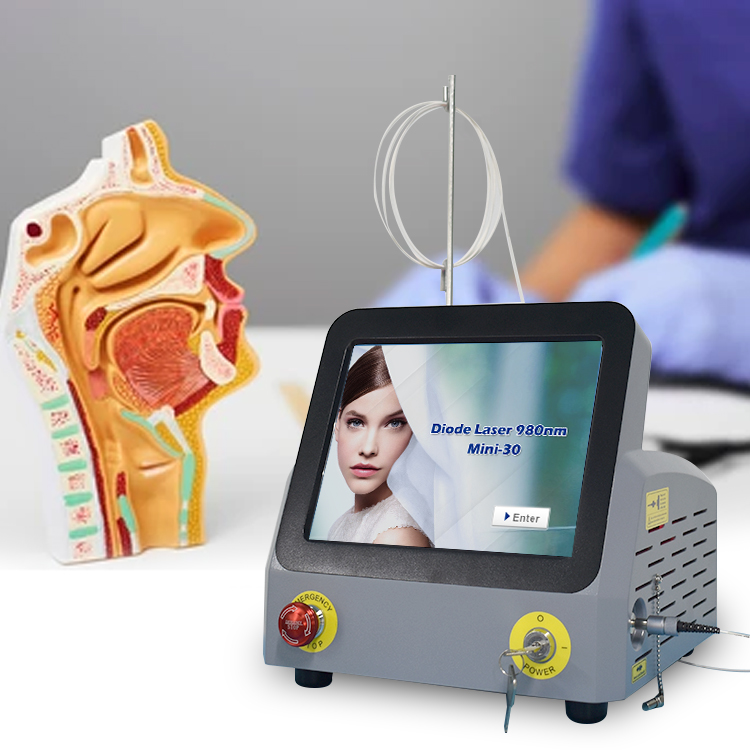
- Name:ENT Diode laser
- Laser type:Diode Laser Gallium-Aluminum-Arsenide GaAlAs
- Output power:30W
- Pulse width:0.00-10.0s
- Delay:0.00-10.0s
- Working Mode:CW, Pulse and Single
- Fiber connector:SMA905 international standard
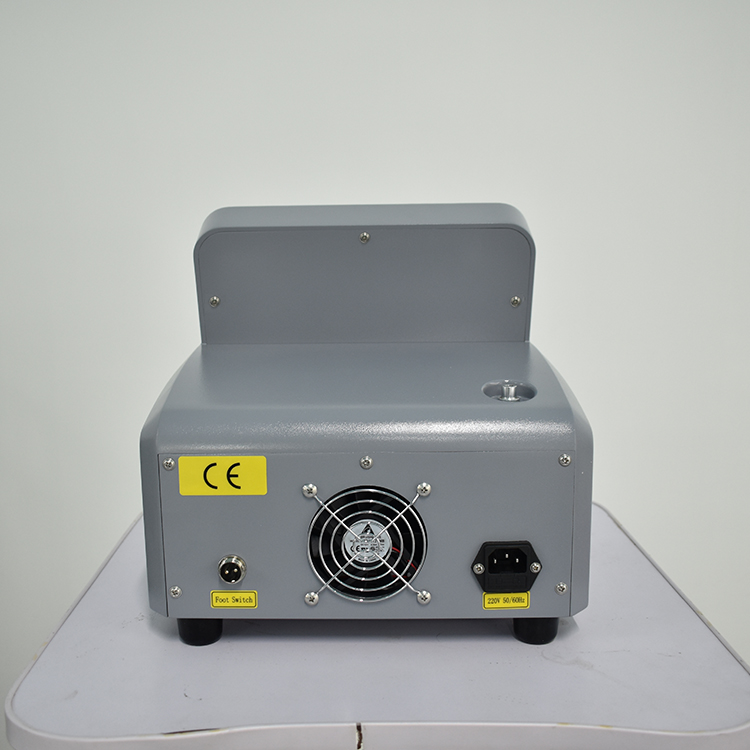
- Voltage:100-240V, 50/60HZ
- Fiber diameter:600 um metal covered fiber
- Weight:6.3KG
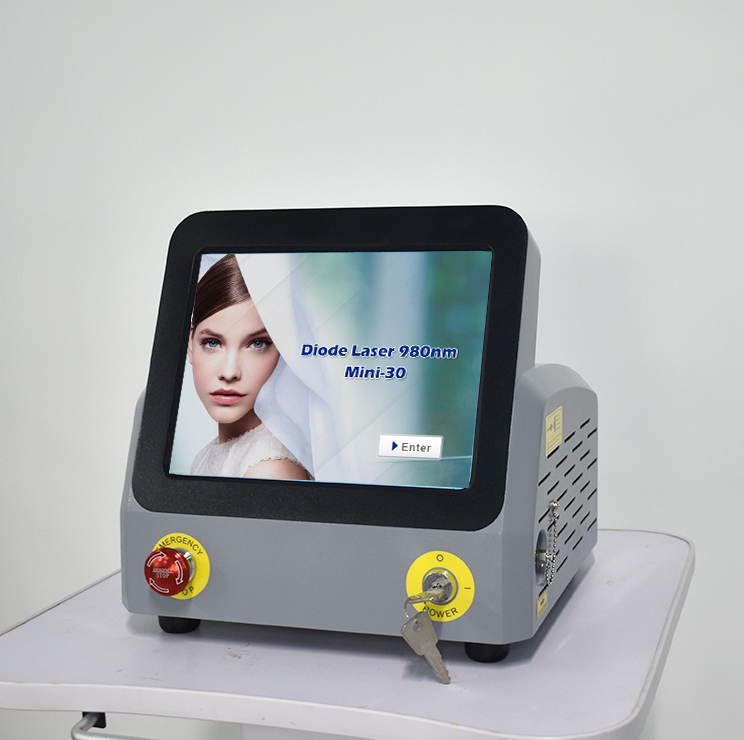
2024 Professional Diode Laser Instrument 980nm Diode Laser Treating Ent
Products Description
Model | MINI-30 |
Laser type | Diode Laser Gallium-Aluminum-Arsenide GaAlAs |
Wavelength | 980nm |
Output Power | 30W |
Working modes | CW, Pulse and Single |
Pulse | 0.00-1s |
Delay | 0.00-1s |
Indication light | Adjustable Red indicator light 650nm |
Fiber | 400 (bare fiber) |
Product Details
INTRODUCTION
Laser is now universally accepted as the most advanced technological tool in various specialities of surgery. However the
properties of all lasers are not alike and surgeries in the ENT field have advanced significantly with the introduction of Diode Laser.
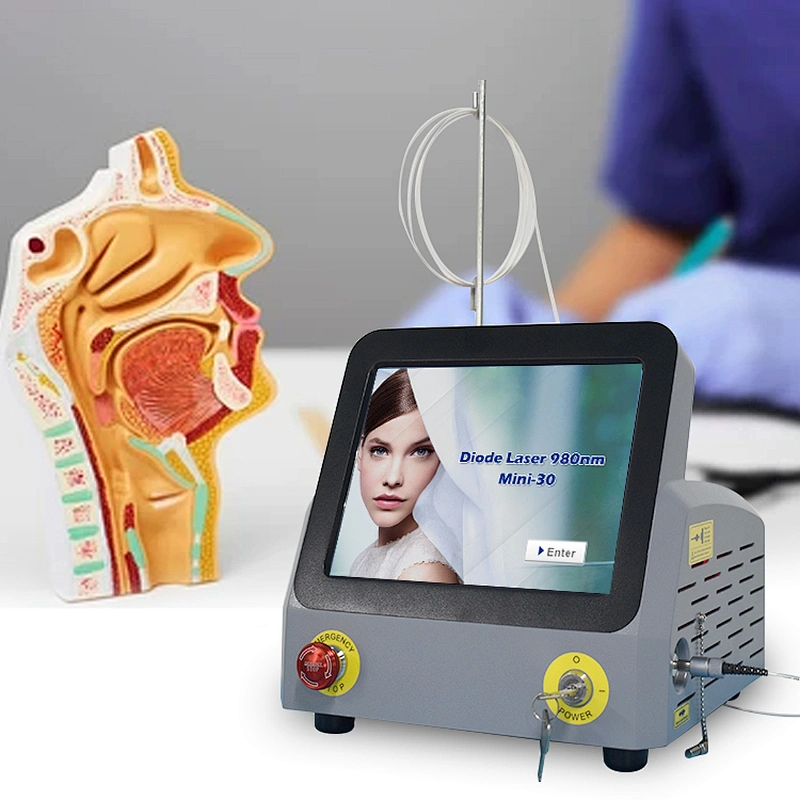
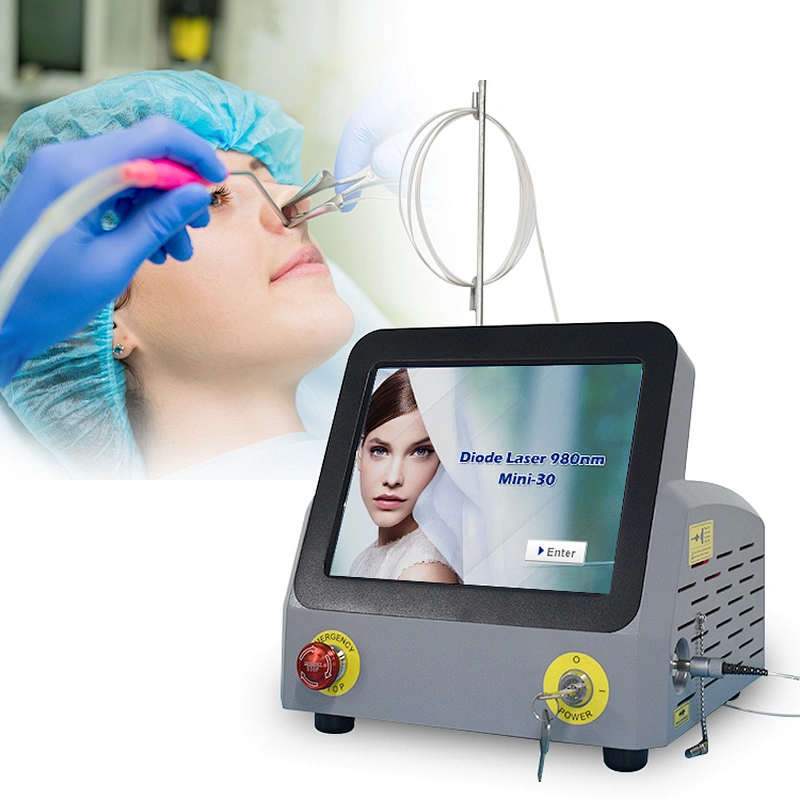
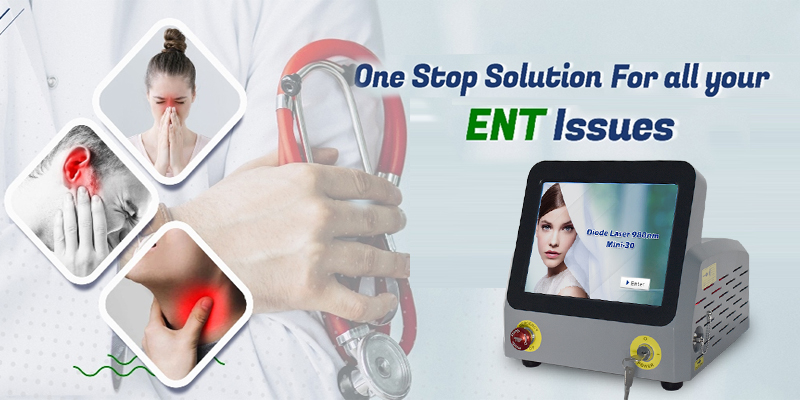
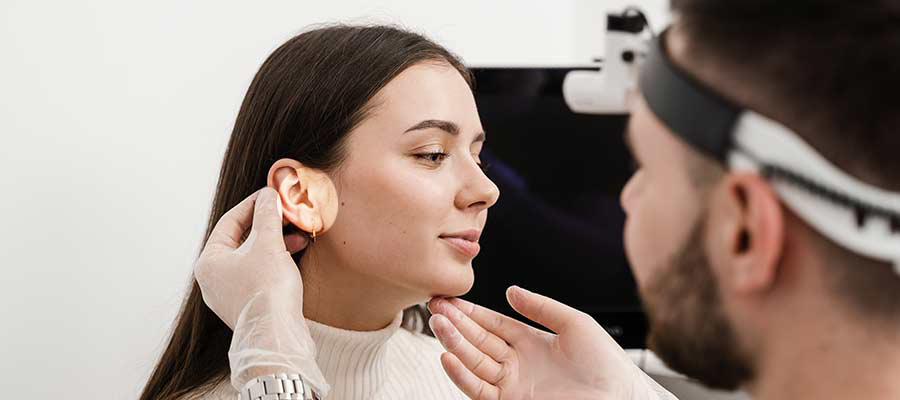
Diode Laser offers the most bloodless surgery available today. This laser is especially suited for ENT works and finds application in various aspects of surgery in the ear, nose, larynx, neck etc. With introduction of Diode Laser, there has been a significant improvement in the quality of ENT surgery.
properties of all lasers are not alike and surgeries in the ENT field have advanced significantly with the introduction of Diode Laser.
Diode Laser offers the most bloodless surgery available today. This laser is especially suited for ENT works and finds application in various aspects of surgery in the ear, nose, larynx, neck etc. With introduction of Diode Laser, there has been a significant improvement in the quality of ENT surgery.
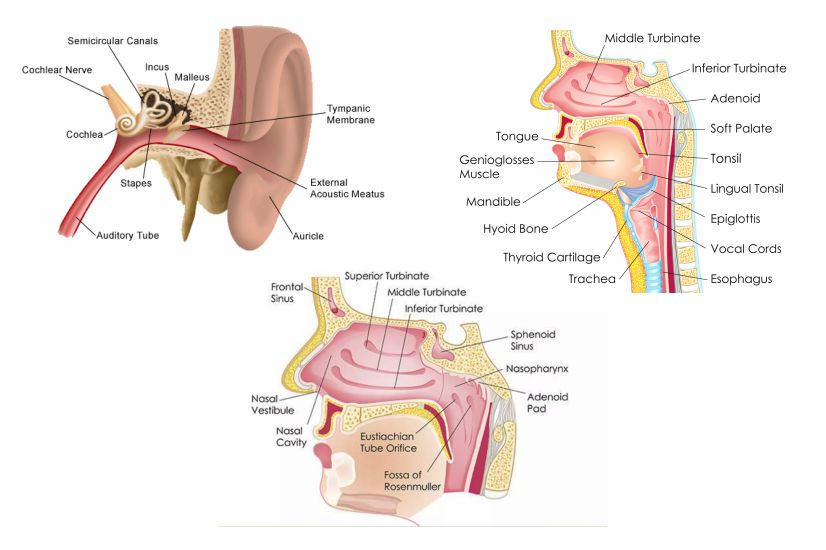
The commonly used lasers in ENT till date were CO2 (carbondioxide), argon laser and Nd: YAG laser. The diode laser, 980 nm wavelength which was invented and introduced to the field of ENT surgery recently, combines the beneficial effects of all these lasers into one. The tissue cutting effect is comparable to that of CO2 laser, its coagulation effects are comparable to that of argon laser, and it results in a slightly higher degree of absorption by tissue than does the ND: YAG laser.
This a lightweight, portable 980nm wavelength Diode laser with a fiber optic delivery system is being used widely the field of otolaryngology, as it is more affordable.
This a lightweight, portable 980nm wavelength Diode laser with a fiber optic delivery system is being used widely the field of otolaryngology, as it is more affordable.
Advantages in ENT
Applications:
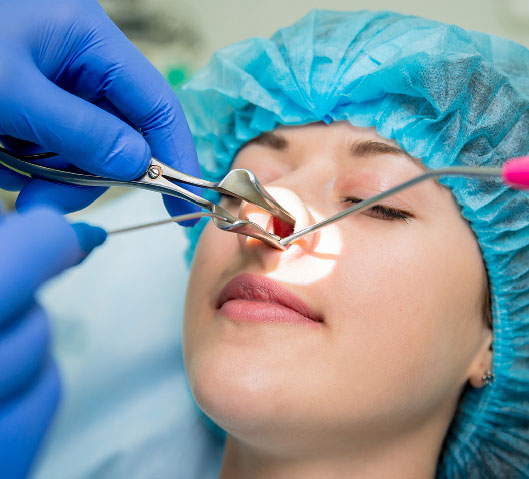
1It can be used in contact mode, in which the tip of the fiber is placed directly on the surface of the tissue. This mode is
effective for both photocoagulation and vaporization of tissue, depending on the power density. At the low- or mid-power
range,coagulation occurs; at a higher level, vaporization occurs.
2The laser can be used in near-contact mode, in which the tip of the fiber remains several millimeters apart from the tissue. This mode is largely used for tissue photo coagulation.
effective for both photocoagulation and vaporization of tissue, depending on the power density. At the low- or mid-power
range,coagulation occurs; at a higher level, vaporization occurs.
2The laser can be used in near-contact mode, in which the tip of the fiber remains several millimeters apart from the tissue. This mode is largely used for tissue photo coagulation.
Ear
* Cysts
* Accessory auricle
* Tumors of the inner ear
* Hemangioma
* Myringotomy
* Cholesteatoma
* Tympanitis
* Accessory auricle
* Tumors of the inner ear
* Hemangioma
* Myringotomy
* Cholesteatoma
* Tympanitis
Nose
* Nasal polyp, rhinitis
* Turbinate reduction
* Papilloma
* Cysts & Mucoceles
* Epistaxis
* Stenosis & synechia
* Sinus surgery
* Dacryocystorhinostomy ( DCR )
* Turbinate reduction
* Papilloma
* Cysts & Mucoceles
* Epistaxis
* Stenosis & synechia
* Sinus surgery
* Dacryocystorhinostomy ( DCR )
Throat
* Uvulopalatoplasty ( LAUP )
* Tonsillotomy
* Glossectomy
* vocal cord polyps
* Epiglottectomy
* Stricture
* Tonsillotomy
* Glossectomy
* vocal cord polyps
* Epiglottectomy
* Stricture
Company Profile
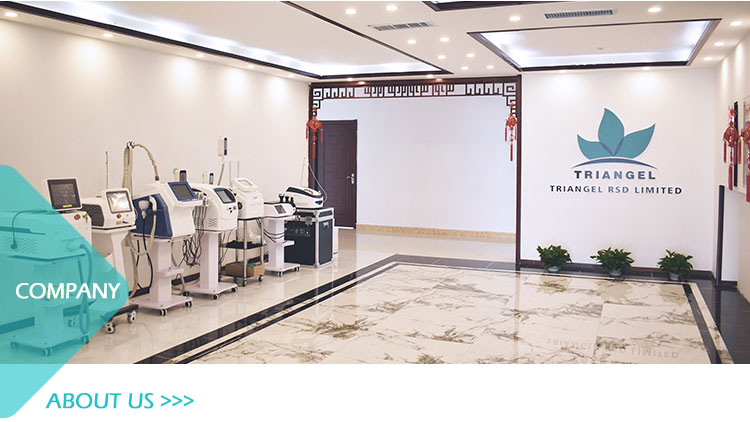
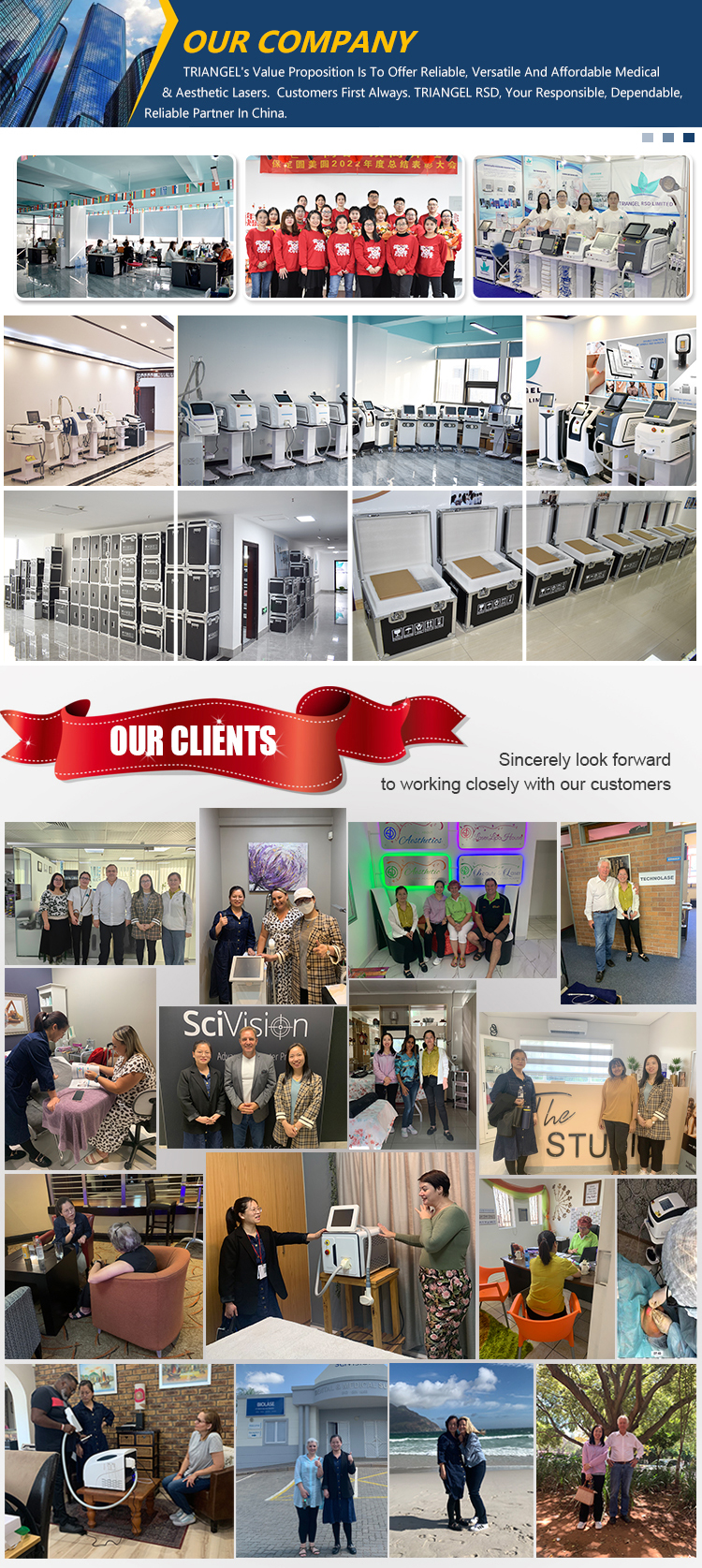
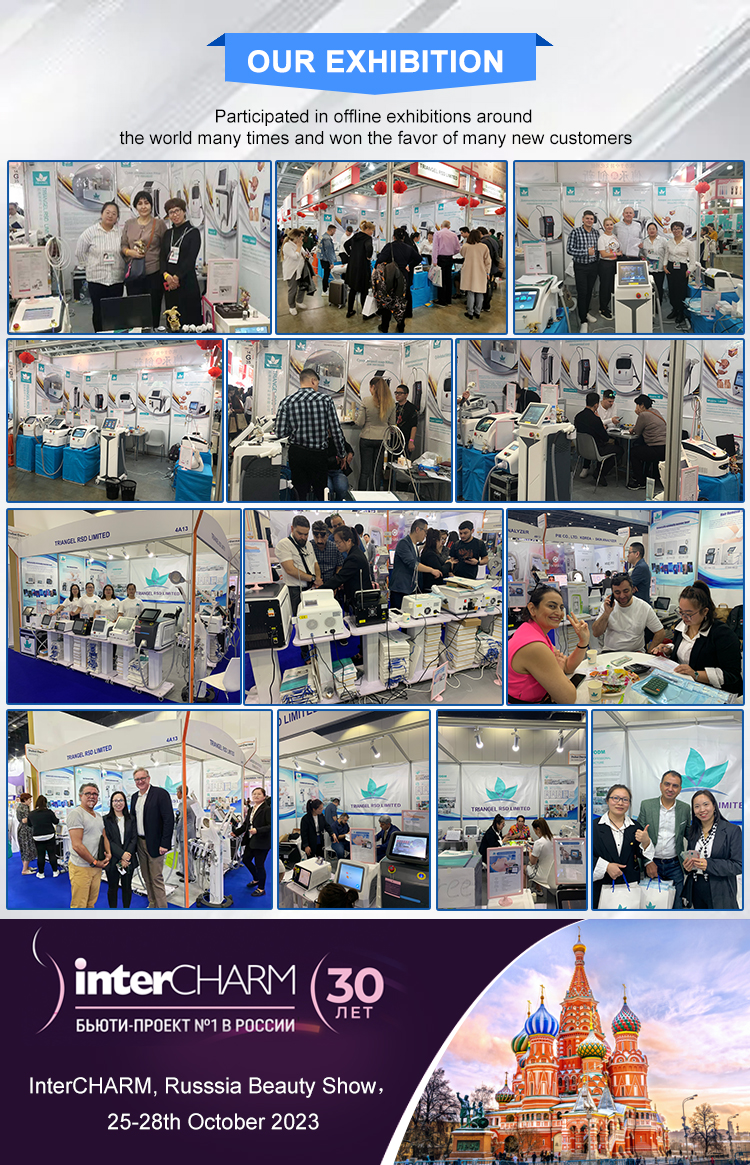
BAODING TAZLASER ELECTRONICS TECHNOLOGY LIMITED,is one of the specialized manufactures focused on the Aesthetics & Laser equipment in China,established in March 2010.We have our own repair companies & training centers in several countries,like Portugal,Russia,Australia,South Africa...could offer the technical support and clinical training in the fast and efficient way. TRIANGEL got different certificates for clients from all over the world.CE,ISO13485, RoHS;We also take part in exhibitions every year,Cosmoprof Asia(HongKong),DUBAI DERMA,INTERCHARM(Moscow),Expocosmetica(Oporto),AMSCA(South Africa)...
TRIANGEL,hope to be your Responsible,Sincere and Dependable partner in China!
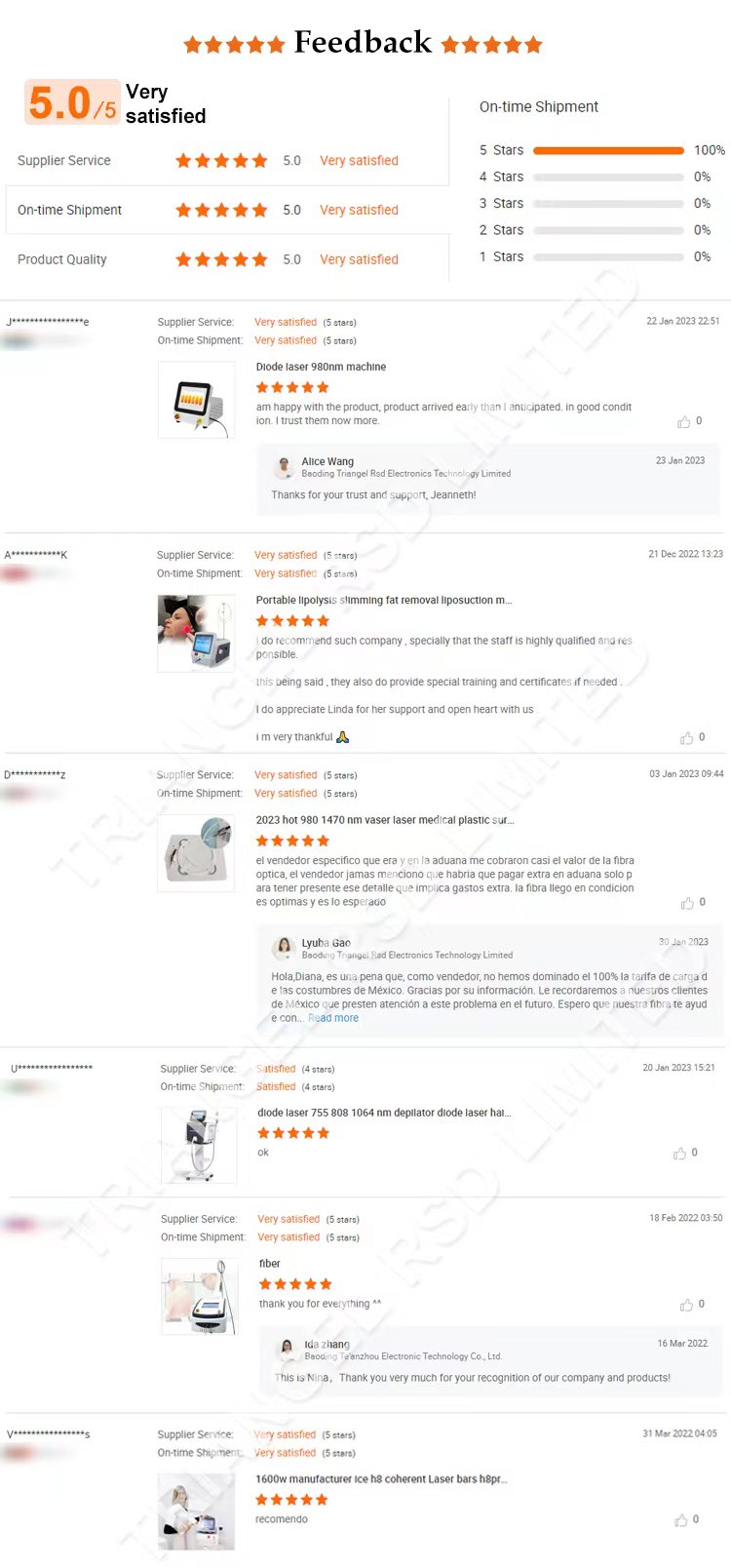
Customer Feedback
FAQ
1.What is the role of 980nm lasers in ENT treatment?
980nm lasers can be used for surgery and treatment of ear, nose and throat diseases. The main function is to achieve cutting, thermal welding, coagulation and ablation through instantaneous shortcuts and thermal energy without surgery.
2.Which ENT problems are suitable for 980nm laser treatment?
980nm lasers are suitable for the treatment of various ear, nose and throat diseases, including but not limited to nasal
polypectomy, nasal septum repair, expansion surgery, tonsillectomy and pharyngeal root surgery, etc.
3.Are 980nm laser treatments safe?
980nm laser treatments are relatively safe with less risk of trauma, bleeding and complications. However, like any other type of surgery or treatment, there are still certain risks and side effects. It must be performed and monitored by an experienced physician.
4.How much time does it take to treat with 980nm laser?
Treatment time will vary depending on the complexity of the specific ENT problem being treated. Typically, the procedure or treatment is short and can be done in minutes to hours.
5.Will there be any discomfort or recovery period after treatment?
Some discomfort may occur after treatment, such as mild pain, tingling, heat or bruising. These discomforts usually subside over days to weeks. The recovery period varies according to the individual differences and complexity of the treatment situation.
2.Which ENT problems are suitable for 980nm laser treatment?
980nm lasers are suitable for the treatment of various ear, nose and throat diseases, including but not limited to nasal
polypectomy, nasal septum repair, expansion surgery, tonsillectomy and pharyngeal root surgery, etc.
3.Are 980nm laser treatments safe?
980nm laser treatments are relatively safe with less risk of trauma, bleeding and complications. However, like any other type of surgery or treatment, there are still certain risks and side effects. It must be performed and monitored by an experienced physician.
4.How much time does it take to treat with 980nm laser?
Treatment time will vary depending on the complexity of the specific ENT problem being treated. Typically, the procedure or treatment is short and can be done in minutes to hours.
5.Will there be any discomfort or recovery period after treatment?
Some discomfort may occur after treatment, such as mild pain, tingling, heat or bruising. These discomforts usually subside over days to weeks. The recovery period varies according to the individual differences and complexity of the treatment situation.